Lawyers for emotional distress: Win Justice 2025
Why Emotional Distress Claims Matter for Your Recovery
Lawyers for emotional distress help victims seek compensation when someone else’s actions cause serious psychological harm. These legal professionals understand that emotional injuries can be just as debilitating as physical ones – sometimes lasting long after visible wounds heal.
Quick Answer: Finding the Right Emotional Distress Lawyer
- Look for experience with psychological injury cases
- Choose lawyers who work with mental health professionals
- Find attorneys who understand evidence requirements for non-physical injuries
- Select firms that offer free consultations and work on contingency
- Verify they handle your specific type of case (workplace, accident)
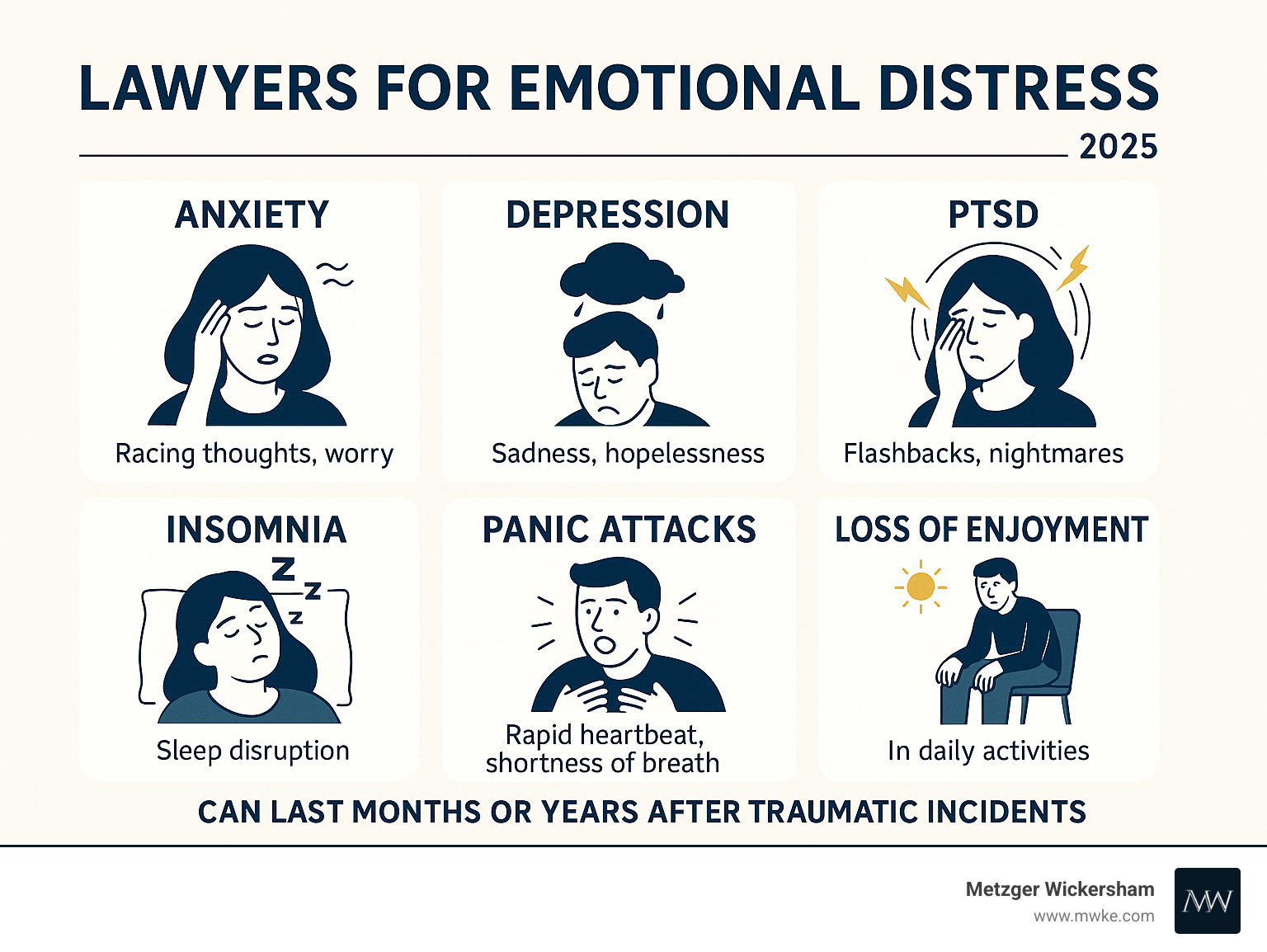
Emotional distress isn’t just feeling upset or sad. In legal terms, it means severe mental suffering that disrupts your daily life. This can include anxiety, depression, PTSD, insomnia, and loss of enjoyment in activities you once loved.
The challenge?
Proving emotional harm in court is complex. Unlike a broken bone that shows up on an X-ray, psychological injuries are invisible. Insurance companies often dismiss these claims or offer lowball settlements.
That’s where the right legal representation becomes crucial. A skilled attorney knows how to gather medical evidence, work with mental health professionals, and present your case in a way that demonstrates the real impact on your life.
In Pennsylvania, you have two years from the incident to file your claim. The clock is ticking, but with proper legal guidance, you can build a strong case for the compensation you deserve.
What Legally Constitutes an Emotional Distress Claim?

Understanding what counts as emotional distress in legal terms can feel overwhelming when you’re already struggling with the psychological aftermath of someone else’s actions. The law recognizes that
emotional distress goes far beyond feeling temporarily upset or having a bad day. It refers to serious
mental anguish and
psychological injury that creates a
serious and prolonged disturbance in your life.
Think of it this way: if your emotional suffering is severe enough to disrupt your sleep, relationships, work, or daily activities for an extended period, you may have grounds for a legal claim. These invisible wounds can be just as debilitating as a broken bone – sometimes more so because they affect every aspect of how you experience life.
Lawyers for emotional distress regularly see clients whose lives have been turned upside down by various traumatic situations. Car accidents often leave lasting psychological scars like driving anxiety or PTSD, which is why having a Car Accident Lawyer in Harrisburg who understands both the physical and emotional impact is crucial.
Workplace incidents create another common source of emotional distress claims. Harassment, discrimination, or unsafe working conditions can trigger anxiety, depression, and panic attacks that persist long after you’ve left that toxic environment.
Medical situations gone wrong also frequently result in emotional trauma. When a Medical Malpractice Lawyer reviews your case, they’re looking at more than just physical harm – misdiagnoses and negligent care can cause profound anxiety and depression that affects your trust in medical professionals for years.
Even seemingly minor incidents like slip-and-fall accidents can create lasting emotional anguish, particularly when they result in chronic pain or make you feel vulnerable in everyday situations. Our Slip and Fall Lawyer team understands how these incidents can shake your confidence and peace of mind.
Types of Emotional Distress Claims
The legal world divides emotional distress claims into two main categories, and understanding the difference matters for your case.
Intentional Infliction of Emotional Distress (IIED) happens when someone deliberately sets out to cause you psychological harm or acts so recklessly that they should have known their behavior would devastate you emotionally. The conduct must be truly
outrageous – not just rude or annoying, but behavior that goes beyond what any reasonable person should have to tolerate.
For IIED claims, courts look for
deliberate or reckless actions that show the person either wanted to hurt you emotionally or didn’t care about the obvious risk of causing severe distress. You can learn more about IIED and how courts evaluate these cases.
Negligent Infliction of Emotional Distress (NIED) is different – it involves
carelessness rather than malicious intent. Someone had a duty to act reasonably to prevent harm, they breached that duty through negligence, and their
breach of duty of care directly caused your emotional suffering.
NIED claims often include
bystander claims, where you witnessed a loved one being severely injured or killed due to someone’s negligence. These cases recognize that watching tragedy unfold can be just as traumatic as experiencing it directly.
Common Symptoms Recognized in Court
Courts don’t expect you to just “get over” genuine emotional distress. They recognize specific symptoms that indicate serious psychological harm.
Anxiety that goes beyond normal worry – we’re talking about persistent, overwhelming fear that interferes with your daily life.
Depression that robs you of joy and motivation, making it hard to function normally.
Insomnia and other sleep disturbances that leave you exhausted and unable to cope.
Many clients describe a complete
loss of enjoyment of life – activities that once brought happiness now feel impossible or meaningless.
Humiliation can be particularly devastating, especially when someone’s actions have damaged your reputation or dignity publicly.
Fear that feels overwhelming and persistent, particularly related to situations similar to your traumatic experience, is another recognized symptom. Post-Traumatic Stress Disorder (PTSD) is a serious condition that can develop after experiencing or witnessing terrifying events, involving flashbacks, severe anxiety, and intrusive thoughts.
Panic attacks bring sudden, intense fear accompanied by physical symptoms like racing heart, shortness of breath, or dizziness.
Mood swings and irritability that seem to come from nowhere can also indicate significant emotional distress.
The key is that these symptoms must be severe enough that no reasonable person should be expected to endure them, and they must be directly connected to the incident that caused your emotional trauma.
The Critical Steps to Proving Your Emotional Distress Case

Building a successful emotional distress case feels like trying to prove the wind exists – you can’t see it, but you can certainly feel its impact.
Lawyers for emotional distress understand this unique challenge and know how to make invisible wounds visible in the eyes of the law.
The biggest hurdle we face is the subjective nature of emotional suffering. While a broken arm shows up clearly on an X-ray, depression and anxiety live in the shadows of the mind. Simply saying “I feel terrible” won’t win your case. We need to transform your inner pain into concrete, legally recognized evidence.
Every emotional distress case must prove four key elements. First, we establish that the defendant had a
duty of care – a legal obligation to act reasonably and avoid causing harm. Next, we show they
breached that duty through careless or intentional actions. Then comes
causation – proving their actions directly caused your emotional suffering. Finally, we demonstrate
actual damages – that you suffered real, severe emotional distress as a result.
Time is not on your side when it comes to filing your claim. Pennsylvania’s
statute of limitations gives you just two years from the incident to take legal action. Miss this deadline, and you could lose your right to compensation forever. The clock starts ticking immediately, which is why we encourage you to reach out as soon as possible. You can learn more about the specific requirements in the PA Statute of Limitations.
Essential Evidence for Your Claim
Think of building your emotional distress case like constructing a bridge – every piece of evidence serves as a support beam that makes your claim stronger. The more evidence you gather, the more solid your foundation becomes.
Medical records form the backbone of your case. These include psychiatric evaluations, therapy session notes, formal diagnoses, and prescription records. When a licensed mental health professional documents your condition using established diagnostic criteria, it transforms your suffering from “just feeling bad” into a medically recognized injury.
Your personal story matters immensely. We encourage clients to keep a daily journal documenting their emotional state, symptoms, and how the distress affects their daily life. Write about sleepless nights, panic attacks at the grocery store, or the inability to enjoy activities you once loved. These raw, honest accounts provide powerful insight into your struggle.
The people closest to you can be your strongest advocates. Family members, friends, and coworkers can testify about the changes they’ve witnessed in your personality, behavior, and daily functioning since the incident. When your spouse describes how you went from being outgoing to barely leaving the house, it paints a vivid picture of your change.
Financial documentation tells another part of your story. Lost wages from missed work, therapy costs, psychiatric appointments, and medication expenses all demonstrate the real-world impact of your emotional distress. These records help quantify damages that might otherwise seem intangible.
Modern technology sometimes provides unexpected evidence. Heart rate data from fitness trackers during stressful episodes, text messages showing your distress, or even social media posts that document your emotional journey can all support your case.
The Role of Medical Professionals and Expert Testimony
Mental health professionals serve as translators between your inner experience and the legal system.
Psychologists and psychiatrists provide the clinical credibility that transforms personal suffering into legally recognized injury.
These professionals conduct thorough evaluations to
establish formal diagnoses like PTSD, major depression, or anxiety disorders. Their assessments follow established medical criteria, giving your emotional distress the same legitimacy as any physical injury.
Perhaps most importantly, qualified mental health professionals can
link your emotional distress directly to the defendant’s actions. They explain how the traumatic event triggered or worsened your psychological condition, creating the crucial connection between cause and effect.
During settlement negotiations,
detailed expert reports carry significant weight. These documents outline your condition’s severity, necessary treatment, and long-term prognosis. Insurance companies take these professional opinions seriously when evaluating claims.
If your case goes to court, mental health professionals
provide compelling testimony that helps judges and juries understand your invisible injuries. They educate the courtroom about the nature of psychological trauma and its real-world impact on your life.
While some jurisdictions have relaxed requirements for formal psychiatric diagnoses, having medical evidence from qualified professionals significantly strengthens your position. These experts help others understand that emotional injuries can be just as debilitating as broken bones – they just heal differently and often take much longer to recover from.
How Experienced Lawyers for Emotional Distress Secure Fair Compensation

When you’re struggling with emotional distress, putting a dollar amount on your suffering might feel impossible. Yet securing fair compensation isn’t just about covering your medical bills – it’s about acknowledging the profound impact on every aspect of your life.
Lawyers for emotional distress understand that your pain goes far beyond what shows up on a hospital bill. That’s why we fight for what the legal system calls
non-economic damages – compensation for the intangible losses that stem from your emotional suffering.
These damages cover your
pain and suffering, but they also recognize something deeper. When trauma steals your ability to enjoy a sunset, laugh with friends, or feel safe in your own home, that loss deserves acknowledgment and compensation.
Calculating these damages requires understanding several key factors that influence your case’s value. The
severity of your distress matters tremendously – the more intense and debilitating your emotional suffering, the higher your potential compensation. Whether you’re battling severe anxiety, depression, or PTSD, we document every aspect of your struggle.
The
duration of your suffering also plays a critical role. Temporary distress that resolves in weeks carries different weight than chronic conditions that may last years. When emotional trauma creates permanent changes in how you experience life, this significantly impacts your compensation.
Perhaps most importantly, we examine how your emotional distress affects your
daily activities and relationships. Can you still work effectively? Do you avoid social situations you once enjoyed? Have your closest relationships suffered because of what you’ve endured? These
deep psychological marks – similar to how someone with permanent physical scars might experience ongoing depression – are real and compensable damages.
Pennsylvania’s approach to damage caps varies depending on your specific type of claim, and we’ll thoroughly review how these considerations apply to your unique situation. Unlike some states that impose strict limits, Pennsylvania’s rules often allow for more comprehensive recovery when the evidence supports it.
Beyond non-economic damages, we also pursue
economic damages that are more straightforward to calculate. Your
lost income from missed work days or reduced earning capacity matters. Every dollar spent on therapy, psychiatric care, medication, and diagnostic tests adds up. Most importantly, we project your
future therapy costs because healing from emotional trauma often requires ongoing support.
How a Lawyer Steers Your Emotional Distress Claim
Dealing with an emotional distress claim while you’re already struggling psychologically can feel overwhelming. Insurance companies know this, and they often use your vulnerable state to their advantage. That’s where having dedicated legal representation becomes crucial.
We start with a thorough
case evaluation of your situation. This means understanding not just what happened, but how it continues to affect you daily. We review the defendant’s actions, assess the severity of your emotional distress, and determine the strength of your potential claim.
Navigating legal complexities in emotional distress cases requires understanding intricate doctrines like Intentional and Negligent Infliction of Emotional Distress. Each has specific requirements that must be met. Our Personal Injury Lawyer in Lancaster and throughout Pennsylvania understand these nuances inside and out.
Evidence gathering and preservation becomes our immediate priority. We know that emotional distress cases live or die on the strength of documentation. Medical records, therapy notes, personal journals, witness statements – we help you collect everything needed to prove the life-changing effects of your emotional injuries.
One of our most valuable services involves
handling all communications with insurance companies. These conversations can be tricky territory. Insurance adjusters are trained to minimize your suffering and push for low settlements. They might ask leading questions or request statements that could hurt your case later. We manage these interactions completely, protecting your rights while you focus on healing.
When it comes to
negotiating a fair settlement, we use the comprehensive evidence we’ve gathered to demonstrate the full scope of your damages. We understand that emotional distress settlements need to account for both your current suffering and future needs. Many cases resolve at this stage when the other side recognizes the strength of our documentation.
However, if negotiations don’t produce a fair offer, we’re fully prepared for
litigation. Taking your case to court means presenting your story compellingly to a judge and jury. We help them understand that emotional injuries can be just as devastating as physical ones – sometimes more so because they’re invisible and often misunderstood.
Our team approach at Metzger Wickersham means you’re never alone in this process. With over 135 years of experience fighting for the injured, we’ve seen how emotional trauma can reshape lives. We’re committed to ensuring that every aspect of your suffering receives proper recognition and compensation, whether through settlement or trial.
Frequently Asked Questions About Emotional Distress Lawsuits
We know that dealing with emotional distress is overwhelming enough without having to steer the legal system on your own. That’s why we want to answer the questions we hear most often from clients who are considering whether they have a valid claim.
Can I sue for emotional distress without a physical injury?
The short answer is yes – you can pursue compensation for emotional distress even when there’s no physical injury involved.
However, we won’t sugarcoat the reality – standalone emotional distress claims can be more challenging to prove than cases where physical injuries are also present. Courts want to see that your suffering goes far beyond ordinary upset or annoyance. You’ll need to demonstrate serious, prolonged emotional disturbance that significantly impacts your daily life.
The challenge of proving the claim without a corresponding physical injury lies in making the invisible visible. That’s where strong medical evidence, detailed documentation, and experienced
lawyers for emotional distress become crucial to your success.
The evolving legal landscape is increasingly recognizing that severe emotional harm can be just as devastating as physical injuries. Some courts now acknowledge that invisible wounds deserve the same consideration as broken bones – because the impact on your life can be equally profound.
What are the first steps I should take if I believe I have a claim?
Time is critical when you’re dealing with potential emotional distress claims. Pennsylvania’s two-year statute of limitations means you can’t afford to wait. Here’s what you should do immediately to protect your rights:
Seek immediate medical attention for your mental and emotional well-being. This isn’t just about your health – though that’s the most important part. Getting professional help from a psychologist, psychiatrist, or therapist creates a medical record that documents your condition and starts your treatment plan.
Document everything related to the incident and your symptoms. Start keeping a detailed journal right away. Write down dates, times, what happened, how you felt, and most importantly, how your emotional distress affects your daily life. Can’t sleep? Write it down. Avoiding places that remind you of the incident? Document it. Having trouble concentrating at work? Record it.
Preserve all evidence, including communications and records. Don’t delete anything. Save emails, text messages, photos, videos, medical bills, therapy notes – anything that connects to the incident or shows how it’s affected you. You might not think something is important now, but it could be crucial later.
Avoid speaking to the at-fault party’s insurance adjusters. Insurance companies aren’t on your side, no matter how friendly they sound. They’re trained to minimize payouts and may try to get you to make statements that hurt your claim. Let us handle those conversations instead.
Contact us for a no-obligation consultation as soon as possible. We can review your situation, explain your legal options, and help you understand what comes next. The clock is already ticking on your claim.
How do emotional distress claims work in a Workers’ Compensation case?
Workers’ Compensation system rules operate very differently from regular personal injury lawsuits, and emotional distress claims can be particularly tricky in this context.
Mental injury claims are often more complex because Workers’ Compensation typically covers injuries that arise from your job duties. But not all workplace stress qualifies for compensation. The system recognizes that every job has some level of stress – dealing with difficult customers, meeting deadlines, or handling workplace conflicts.
To succeed with an emotional distress claim in Workers’ Compensation, you
typically need to prove that unusual or abnormal working conditions caused the distress. This might include severe harassment from supervisors, witnessing a traumatic workplace accident, or being subjected to discrimination that goes far beyond normal workplace tensions.
For example, if your boss occasionally raises their voice during busy periods, that probably won’t qualify. But if you’re subjected to months of verbal abuse, threats, or harassment that creates a hostile work environment, you may have a valid claim.
This differs from standard personal injury lawsuits in several important ways. Workers’ Compensation generally covers medical treatment and lost wages, but it doesn’t include compensation for pain and suffering like you’d find in a civil lawsuit. The trade-off is that Workers’ Compensation doesn’t require you to prove fault – just that your injury is work-related.
If you’re dealing with work-related emotional distress, we can help you understand whether your situation fits within Workers’ Compensation guidelines or if you might have other legal options available.
Conclusion: Taking the Next Step Towards Justice and Recovery
The journey through emotional distress can feel isolating and overwhelming, but understanding your legal rights marks an important step toward healing. Throughout this guide, we’ve shown that
emotional distress is a serious and compensable harm – one that deserves the same recognition and compensation as any physical injury.
Your invisible wounds are real. The sleepless nights, the anxiety that grips you without warning, the way simple tasks now feel impossible – these aren’t just “in your head.” They’re legitimate injuries that have turned your world upside down, and the law recognizes this reality.
The importance of strong evidence and prompt action cannot be overstated. From detailed medical records and personal journals to witness statements and expert testimony, every piece of documentation helps paint the complete picture of your suffering. These elements work together to make your invisible injuries visible to insurance companies, judges, and juries.
Time is working against you, though. Pennsylvania’s two-year statute of limitations means the clock is already ticking on your right to seek justice. Every day you wait is a day closer to potentially losing your opportunity for compensation forever.
The right legal guidance is critical to navigating the complexities of your claim. Emotional distress cases require a deep understanding of both the legal system and the human experience of trauma. You need someone who can translate your pain into compelling evidence and who won’t back down when insurance companies try to minimize your suffering.
At Metzger Wickersham, we’ve spent over 135 years fighting for people just like you across Pennsylvania – from Harrisburg to York, Lancaster to Williamsport. Our client-focused, team-based approach means you’re not just getting one lawyer; you’re getting an entire support system dedicated to your recovery and your case.
We understand that pursuing a legal claim while dealing with emotional trauma can feel daunting. That’s exactly why we handle the legal complexities while you focus on healing. We know how to gather the right evidence, work with mental health professionals, and present your case in a way that insurance companies and courts can’t ignore.
Don’t wait, as the statute of limitations restricts your time to file a claim. The support and justice you deserve are within reach, but only if you act now. Schedule a free consultation with our Personal Injury team today to protect your rights and begin your journey toward both healing and fair compensation.
Your emotional distress matters. Your recovery matters. And with the right
lawyers for emotional distress by your side, you can transform your suffering into a powerful claim for justice. Let us help you take that crucial first step.