...

Truck Accident Lawyer in Wilkes-Barre PA

The Alarming Reality of Collisions with Large Trucks 

Truck Accident Lawyer When a heavy truck accident occurs, the consequences are often catastrophic specially if you dont have  a truck accident lawyer. Here’s what you need to know: Key Facts About Heavy Truck Accidents:
  • 5,837 large trucks were involved in fatal crashes in 2024
  • 5,936 people died in large-truck crashes that same year
  • 70% of fatalities are occupants of other vehicles, not the truck
  • 161,000 people were injured in truck accidents in 2024
  • Accidents have increased 49% over the last 10 years
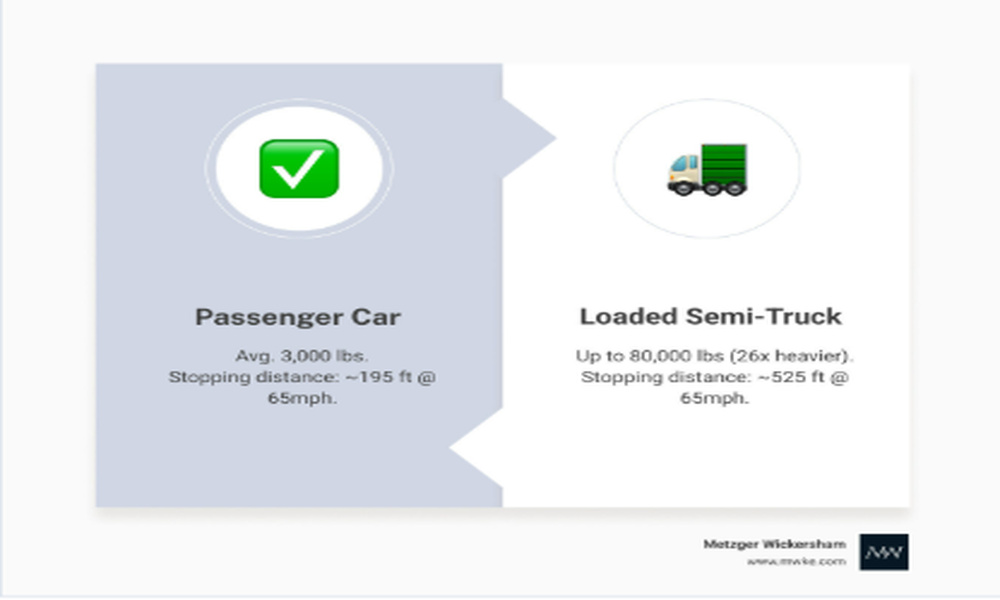
Large trucks are defined as vehicles with a gross weight rating over 10,000 pounds. This includes semi-trucks, tractor-trailers, and other commercial vehicles that can weigh up to 80,000 pounds when fully loaded. The size difference between a passenger car and a loaded semi-truck creates a deadly mismatch on our roads. While your car might weigh 3,000 pounds, that 18-wheeler next to you could be 26 times heavier. The numbers tell a troubling story. More than half of fatal truck crashes happen on rural roads, but they occur everywhere – from busy interstates to local streets. What makes these accidents so devastating isn’t just the size difference, but also the physics involved when such massive vehicles lose control. Understanding why these accidents happen and how to stay safe around large trucks could save your life or the life of someone you care about.

Truck Accident Lawyer

The Sobering Statistics: A Look at Recent Accident Trends

The numbers don’t lie, and they’re telling us something we need to hear. Heavy truck accidents aren’t just happening more often – they’re becoming deadlier too. Let’s start with the hard facts from 2022. That year alone, 5,837 large trucks were involved in fatal crashes. That’s a 1.8% jump from 2021, but here’s what really gets your attention: it’s a whopping 49% increase over the past decade. We’re not talking about a small uptick here – this is a serious trend that affects everyone on the road. The human cost is even more heartbreaking. 5,936 people lost their lives in large-truck crashes in 2022. Again, that’s up 2% from the year before and 49% higher than ten years ago. Behind each of these numbers is a family, a community, a life cut short. But fatal crashes only tell part of the story. When we look at injury crashes, the picture gets even more concerning. In 2022, 120,200 large trucks were involved in crashes that hurt someone – a 2.5% increase from 2021. The total number of people injured climbed to 161,000, which is 3.9% higher than the previous year. Here’s something that might surprise you: if you’re in a heavy truck accident, the person most likely to get hurt isn’t the truck driver. In 2021, 71.7% of deaths in these crashes were people in other vehicles – cars, SUVs, motorcycles. Only 17.4% were truck occupants themselves. This stark difference shows just how dangerous it is for the rest of us when these massive vehicles are involved in crashes. So where do these accidents happen most? More than half of fatal large-truck crashes – 53.98% to be exact – occur on rural roads. About a quarter (26.61%) happen on interstates, and construction zones account for 4.6% of these deadly incidents. Even though large trucks make up 10% of total vehicle miles traveled, they’re involved in 6% of all fatal crashes, which tells us these accidents tend to be particularly severe. The ten-year trend is what really keeps safety officials up at night. We’re not seeing random spikes and dips – we’re seeing a steady, concerning increase in both crashes and casualties. According to the National Safety Council, this data comes from trusted sources like the National Highway Traffic Safety Administration and Federal Highway Administration, so we know these numbers are solid. What makes these statistics even more sobering is that they represent real people going about their daily lives – commuting to work, taking family trips, or just running errands. The road we all share is becoming more dangerous, and understanding these trends is the first step in protecting ourselves and our loved ones.

Unpacking the Causes of a Heavy Truck Accident

Understanding what led to a heavy truck accident is complex, as these crashes rarely have a single cause. Instead, they are often the result of several factors converging, such as a mechanical failure combined with poor weather, or a fatigued driver trying to meet a deadline. The combination of these factors creates the perfect storm for tragedy. Truck Accident Lawyer Understanding these causes helps explain why heavy truck accidents are a serious problem. Let’s break down the three main categories: driver-related factors, mechanical failures, and environmental contributions.

Driver-Related Factors in a Heavy Truck Accident

The person behind the wheel plays a huge role in truck safety. Drivers face unique challenges, including handling massive vehicles on tight schedules and pressure to keep goods moving. Driver fatigue is a major concern in heavy truck accidents. Long hours and demanding schedules can push drivers beyond their limits, leading to slower reaction times and poor judgment. Hours of Service (HOS) violations are a key factor. Federal rules limit driving hours, but company pressure can lead to violations. Investigators check logbooks and Electronic Logging Device data to see if limits were exceeded. Distracted driving is dangerous for any driver, but especially for truckers. In 2021, distraction and inattention were common factors in fatal large truck crashes. Speeding is especially risky for trucks, which need much more distance to stop than cars. Driving too fast for conditions puts everyone at risk and was the most frequent driver-related factor in fatal large truck crashes. Driving under the influence still occurs. In 2021, 6% of large truck drivers in fatal crashes tested positive for at least one drug. Any impairment can be catastrophic when operating such a large vehicle. Inadequate training can be a factor. A driver lacking experience with certain cargo, weather, or emergencies may be unprepared, turning a challenging situation into a deadly one.

Mechanical Failures and Maintenance Issues

Even a careful driver can have a heavy truck accident if their vehicle isn’t properly maintained. These issues often point to problems with a trucking company’s responsibilities. Brake failure is a nightmare scenario. These vehicles rely on complex air brake systems, and when something goes wrong, the results can be devastating. Poor maintenance or faulty parts can lead to a complete loss of stopping power. Tire blowouts can happen without warning, causing a driver to lose control. Improper inflation, overloading, or worn treads can cause a blowout, sending a truck rolling over or into other vehicles. Steering problems are terrifying because they can make it impossible to control the vehicle. A malfunction at highway speeds often leaves little a driver can do to prevent a collision. Improperly secured cargo creates a hidden danger. If cargo shifts during transport, it can change how the truck handles, causing it to tip over or spill onto the highway. Defective parts can mean an accident is the fault of the manufacturer. A crucial component failing due to a design flaw can lead to claims against the parts company. Lack of pre-trip inspections is a small oversight with huge consequences. Drivers are required to check their vehicles before hitting the road. Skipping this step can allow dangerous conditions to go unnoticed.

External and Environmental Contributions

Sometimes a heavy truck accident happens because of factors outside the driver’s control. These conditions can quickly turn a routine trip into a dangerous one. Adverse weather conditions like rain, snow, ice, and fog are especially challenging for large trucks. Reduced traction makes stopping difficult for heavy vehicles. Poor road conditions create unique challenges for trucks. Potholes, uneven pavement, or debris can contribute to accidents. Poor road design can also be a factor, leading to claims against government entities. Construction zones are tricky due to narrowed lanes and sudden changes. Large trucks have a harder time navigating these tight spaces, and these zones accounted for 4.6% of fatal large-truck crashes. Heavy traffic makes a truck’s longer stopping distance and large blind spots especially dangerous. Sudden stops can lead to rear-end collisions. Inadequate signage can leave drivers unprepared for changing road conditions like curves or hills, meaning they don’t have time to adjust their speed safely. Night driving combines reduced visibility with potential driver fatigue, creating a risky situation. While most fatal crashes happen in daylight, nighttime driving presents significant challenges.

Common Types of Collisions and Their Devastating Consequences

When a heavy truck accident happens, the physics involved create specific types of crashes that are far more dangerous than typical car-to-car collisions. The massive weight and size of these commercial vehicles mean that when things go wrong, they go very wrong. Jackknife accidents are among the most terrifying to witness. Picture a semi-truck folding in on itself like a pocketknife – that’s exactly what happens when the trailer swings out at a sharp angle from the cab. This usually occurs when a driver hits the brakes too hard on slippery roads or takes a curve too fast. Once a truck starts to jackknife, there’s often little the driver can do to regain control. Rollover crashes happen because trucks have such a high center of gravity. It doesn’t take much – a sharp turn, sudden swerve, or shifting cargo – and an 80,000-pound truck can tip over like a giant domino. These crashes often block multiple lanes and can involve several other vehicles. Perhaps the most devastating are underride and override accidents. In an underride crash, a smaller vehicle slides underneath the truck’s trailer, often shearing off the roof of the car. Override accidents are the opposite – the truck literally drives over a smaller vehicle. Both scenarios are almost always fatal for people in the passenger car. T-bone collisions create that distinctive “T” shape when the front of one vehicle slams into the side of another. When a truck T-bones a car, the side-impact protection that might save you in a car-to-car crash simply isn’t enough against such massive force. Head-on collisions with trucks are among the deadliest accidents on our roads. The combined force of two vehicles traveling toward each other is devastating under any circumstances, but when one weighs 26 times more than the other, the outcome is almost always tragic for the smaller vehicle’s occupants. Sideswipe accidents might sound minor, but they’re anything but when a truck is involved. These happen when vehicles scrape against each other while traveling in the same direction. A truck’s massive blind spots and wide turning radius mean drivers often don’t see smaller vehicles beside them. What starts as a sideswipe can quickly force a car off the road or into oncoming traffic.

Common Injuries Sustained in a Heavy Truck Accident

The reality is stark: in a heavy truck accident, the people in the smaller vehicle almost always suffer the most severe injuries. The size difference is just too great for it to be any other way. Traumatic brain injuries are frighteningly common. Your head might strike something inside the vehicle, or your brain might slam against your skull from the violent forces involved. These injuries can change everything – your ability to think, speak, or even recognize loved ones. Some people recover fully, while others face lifelong challenges. Spinal cord injuries can happen in an instant and last a lifetime. The tremendous force of a truck collision can damage your spine in ways that lead to partial or complete paralysis. These injuries often mean years of medical treatment, rehabilitation, and significant lifestyle changes. Broken bones are almost expected in these crashes, but we’re not talking about simple fractures. The forces involved can shatter bones into multiple pieces, requiring complex surgeries and months of healing. Arms, legs, ribs, and facial bones are particularly vulnerable. Internal organ damage is especially dangerous because you might not realize how badly you’re hurt right away. The blunt force can cause internal bleeding or damage to vital organs like your lungs, liver, or spleen. This is why getting immediate medical attention after any truck accident is so critical. Even whiplash becomes more serious in truck accidents. While you might associate it with minor fender-benders, the violent forces in a truck collision can cause severe whiplash that leads to chronic pain and limited mobility. Catastrophic injuries is the legal term for injuries that permanently change your life – causing disability, disfigurement, or significantly impacting your ability to work or live independently. Unfortunately, these are common outcomes in truck accidents. The most heartbreaking outcome is wrongful death. In 2022 alone, 5,936 people died in large-truck crashes. Behind each of these statistics is a family dealing with an unimaginable loss, often left to steer complex legal and financial challenges while grieving. The severity of these injuries explains why truck accident cases are so complex and why the stakes are so high. When your life has been turned upside down by someone else’s negligence, understanding your rights and options becomes crucial for your future.

The Aftermath: Navigating Investigation and Regulations

When a heavy truck accident happens, the chaos doesn’t end when the dust settles. In fact, that’s when a whole different kind of complexity begins. Unlike a typical fender-bender between two cars, truck accidents trigger investigations that can feel overwhelming for anyone caught up in them. The scene becomes a puzzle with dozens of pieces – federal regulations, company policies, driver logs, mechanical records, and physical evidence all need to come together to tell the complete story. Understanding this process can help you know what to expect during what’s already an incredibly difficult time.

Truck Accident Lawyer

The Role of Trucking Companies and Federal Oversight

The trucking industry operates under a web of federal oversight that most people never think about – until something goes wrong. Trucking company liability extends far beyond simply putting a driver behind the wheel. These companies are responsible for making sure their drivers are properly trained, their trucks are maintained, and safety rules are followed to the letter. Unfortunately, the reality isn’t always so straightforward. The pressure to meet deadlines in the trucking world is intense. Companies compete fiercely for contracts, and that pressure often trickles down to drivers who may feel pushed to cut corners on rest or safety to make their deliveries on time. Negligent hiring is another serious issue. Some companies fail to properly screen drivers, overlooking poor safety records or inadequate training. When an accident happens, investigators will dig deep into the company’s hiring practices and training records. The Federal Motor Carrier Safety Regulations (FMCSR) govern almost every aspect of commercial trucking. These rules, overseen by the Federal Motor Carrier Safety Administration, cover everything from how long a driver can be on the road to how cargo must be secured. You can learn more about these comprehensive regulations from the Federal Motor Carrier Safety Administration. Electronic Logging Devices (ELDs) have revolutionized how driver hours are tracked. These devices automatically record when a truck is moving and when it’s stopped, making it much harder for drivers to fudge their logbooks. After an accident, ELD data becomes crucial evidence in determining whether Hours of Service violations played a role. Maintenance records tell their own story. Trucking companies must keep detailed logs of every repair, inspection, and maintenance check. These records often reveal whether mechanical problems were ignored or if proper care wasn’t taken to keep vehicles road-worthy.

Challenges in Accident Investigation

Investigating a heavy truck accident is like solving a complex mystery where the evidence can disappear quickly if you’re not careful. Time is absolutely critical in these situations. Preserving evidence becomes a race against the clock. Skid marks fade, debris gets cleared away, and trucks get towed to repair yards where they might be altered or fixed before investigators can examine them properly. Weather can wash away crucial physical evidence within hours. The black box (ECM) data retrieval process is fascinating but technical. Most modern trucks are equipped with an Engine Control Module that records detailed information about the vehicle’s performance in the moments leading up to a crash. This data can show exactly how fast the truck was going, whether the driver hit the brakes, and how the engine was performing. Witness statements provide the human perspective that data can’t capture. Other drivers might have noticed the truck weaving or driving erratically before the crash. Pedestrians or people in nearby buildings might have seen things that help piece together what really happened. Accident reconstruction brings science into the investigation. These professionals use physics, engineering principles, and all the available evidence to create a detailed picture of how the accident unfolded. They can determine speeds, impact angles, and sequence of events with remarkable accuracy. One of the most frustrating challenges is spoliation of evidence – when important information gets destroyed, whether intentionally or by accident. Sometimes trucking companies dispose of maintenance records or driver logs before investigators can review them. Other times, crucial evidence simply gets lost in the shuffle of normal business operations. The investigation process can take months or even years to complete, especially in serious cases. But this thorough approach is necessary to ensure that all responsible parties are held accountable and that victims get the answers – and compensation – they deserve.

Staying Safe: Tips for Sharing the Road with Large Trucks

Given the alarming statistics and devastating consequences of heavy truck accidents, it’s essential for all drivers to understand how to safely share the road with these massive vehicles. A little extra caution and awareness can make a huge difference in preventing tragedy. The reality is that trucks aren’t going anywhere – they’re a vital part of our economy, delivering everything from groceries to the materials that build our homes. Since we all share the same roads, learning to coexist safely isn’t just smart driving – it’s a matter of life and death.

Truck Accident Lawyer

Defensive Driving Techniques

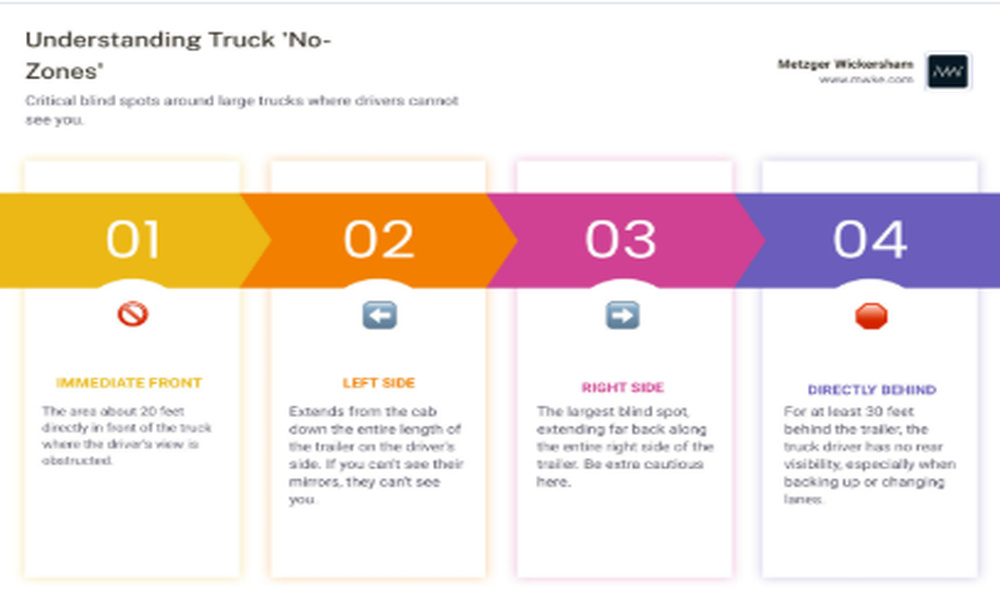
When driving near large trucks, adopting defensive driving techniques isn’t just a suggestion – it’s a necessity for your safety. Think of it as giving these giants the respect they deserve, because physics doesn’t negotiate. Avoiding blind spots (also called “No-Zones”) is your first line of defense. Large trucks have enormous blind spots on all four sides – directly in front, directly behind, and on both sides, especially the right side. Here’s a simple rule: if you can’t see the truck driver’s mirrors, they likely can’t see you. Don’t linger in these danger zones. Maintaining a safe following distance becomes even more critical around heavy trucks. These vehicles need significantly more time and distance to stop than your car – sometimes up to twice as long. Leave at least four seconds of following distance, and add even more time in bad weather or at highway speeds. This buffer gives you precious reaction time if the truck brakes suddenly. When you need to pass with caution, do it quickly and safely on the left side. Make sure you can see the entire front of the truck in your rearview mirror before moving back into the lane. Never cut off a truck after passing – they simply cannot stop or maneuver as quickly as smaller vehicles. Anticipating wide turns can save your life. Truck drivers often need extra room to make turns, especially right turns. They may swing wide to the left before turning right, and some drivers mistakenly think there’s room to squeeze between the turning truck and the curb. Don’t do it. Give them all the space they need. Perhaps most importantly, be patient. Large trucks are slower to accelerate and decelerate, and they require more space for every maneuver. Impatience leads to risky behaviors like tailgating or unsafe passing, which dramatically increase your chances of being involved in a heavy truck accident. Truck drivers are professionals doing their job, but they’re also human beings dealing with enormous vehicles in challenging conditions. A little courtesy and understanding goes a long way toward keeping everyone safe on the road.

Understanding Your Rights After a Collision with Our Truck Accident Lawyer 

The moments after a heavy truck accident can feel overwhelming, and that’s completely understandable. Your world may have just been turned upside down, and you’re likely dealing with serious injuries, mounting medical bills, and a flood of questions about what happens next. Here’s what you need to know: these crashes are fundamentally different from regular car accidents. The web of liability is often complex, involving not just the truck driver but potentially the trucking company, cargo loaders, maintenance providers, and even parts manufacturers. The regulations governing the trucking industry are intricate, and understanding how they apply to your situation is crucial for protecting your rights. Driver error might seem like the obvious culprit, but the reality is often much more complicated. Was the driver pushing beyond legal driving hours because the company pressured them to meet an unrealistic deadline? Was a mechanical failure the result of poor maintenance practices? These are the kinds of questions that need answers, and they require someone who understands both the legal landscape and the trucking industry. Gathering information becomes essential in these cases, but it needs to happen quickly. Critical evidence can disappear fast – from electronic logging device data to maintenance records. Insurance companies representing trucking companies often have teams of investigators on the scene within hours, working to protect their interests. If you’re facing severe outcomes from your crash, you don’t have to steer this challenging time alone. The path forward might seem unclear right now, but understanding your options is the first step toward rebuilding your life. At Metzger Wickersham, we’ve been standing with Pennsylvania families for over 135 years, helping them find their way through some of life’s most difficult challenges. We understand that no two accidents are the same, and we’re here to listen to your story and help you understand what comes next. For those dealing with life-changing injuries, we invite you to explore how our truck accident lawyer can help you steer the path forward after a catastrophic injury. Because sometimes, the most important step you can take is simply reaching out for guidance.