 Skip to content
 Stepping Up: Your Guide to Premises Liability Accidents in Harrisburg
Related Posts
Contact Us
Let Our Team Fight For You

Understanding Premises Liability Accidents: When Property Owners Are Responsible
A premises liability accident occurs when someone is injured on another person’s property due to unsafe conditions that the property owner failed to address. These accidents happen when property owners neglect to maintain safe conditions or warn visitors about known dangers. Key Facts About Premises Liability Accidents: - Property owners have a legal duty to keep their premises reasonably safe
- The level of care depends on why you were on the property (customer, guest, or trespasser)
- Common causes include wet floors, broken stairs, poor lighting, and inadequate security
- You must prove the owner knew or should have known about the dangerous condition
- Premises liability claims make up 11% of all civil cases that go to trial
What is Premises Liability? Understanding a Property Owner’s Duty of Care
When you step onto someone else’s property—be it a shopping mall, a neighbor’s driveway, or a restaurant—the property owner has a legal responsibility for your safety. This is not just courtesy; it’s the law. Premises liability centers on a powerful concept: property owners must maintain reasonably safe conditions for people on their property. This means fixing dangerous conditions they know about, regularly checking for potential hazards, and warning visitors about dangers that aren’t obvious. For example, if a store owner knows a loose floorboard could trip someone, they must fix it or put up a clear warning sign. When property owners fail to take these reasonable steps and someone gets hurt, the law holds them financially responsible for the victim’s injuries and losses. This legal duty applies to all property types. Whether you’re injured at a grocery store, an apartment complex, a government building, or a private home, the principle is the same: property owners cannot let their negligence put others at risk.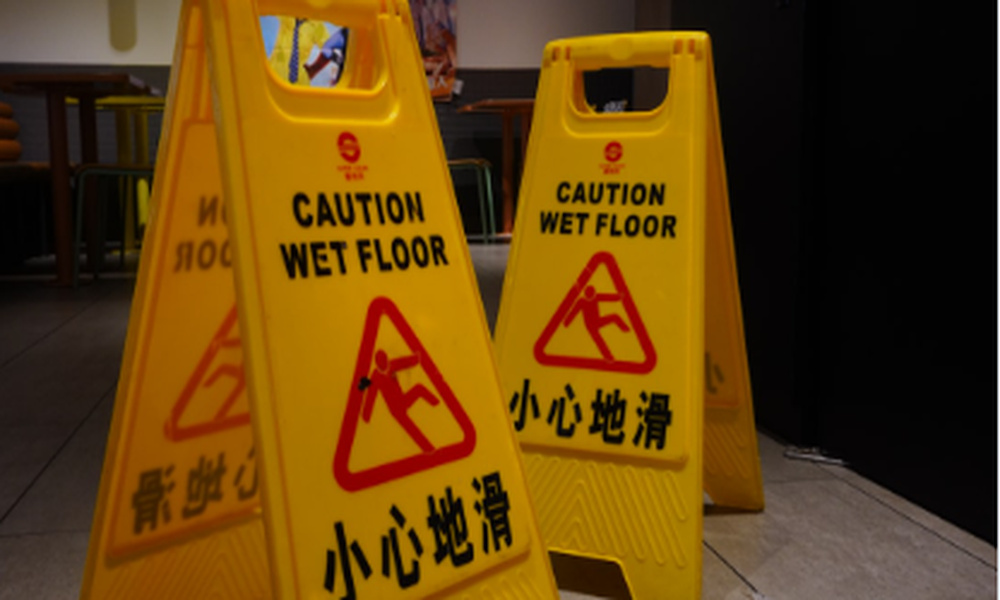
Distinguishing a Premises Liability Accident from a Slip and Fall
Many people confuse the terms “premises liability” and “slip and fall,” but they don’t mean the same thing. A slip and fall is just one specific type of premises liability accident. Every slip and fall case is a premises liability claim, but the broader category of premises liability covers much more than just slipping and falling. Most people picture someone slipping on a wet floor or tripping over a broken sidewalk. These are common causes of premises liability accidents. However, premises liability law also covers dog bites, injuries from poor security (like an attack in a dark parking lot), falling objects, swimming pool injuries, and harm from toxic exposure like mold. The common thread is that someone was hurt on another’s property because it wasn’t kept reasonably safe. If you want to dive deeper into the specifics of slip and fall cases, we have more detailed information that covers these common accidents.Visitor Status and How It Affects Your Claim
Not everyone injured on another’s property has the same legal rights. The level of care a property owner must provide depends on why you were there. Invitees get the highest level of protection. These are people on the property for business purposes, such as customers in a store or clients visiting an office. Property owners must actively inspect their property for dangers, fix any problems, and warn people about non-obvious risks. This aligns with the legal standard of ordinary care property owners must provide. Licensees are social guests who have permission to be on the property for their own purposes. A friend coming over for dinner is a licensee. Property owners must warn licensees about dangers they know about, but they don’t have to inspect for problems they don’t already know exist. Trespassers get the least protection, as they are not supposed to be there. Generally, property owners owe no duty to keep the property safe for trespassers, but they cannot intentionally harm them. An important exception is the attractive nuisance doctrine. This protects children who might be drawn to dangerous things on a property, like an unfenced swimming pool. Even if a child is trespassing, property owners may be responsible if they have something on their property likely to attract kids who don’t understand the danger. Understanding your visitor status is crucial for any premises liability accident claim, as it defines what the property owner should have done to keep you safe.Common Types of Premises Liability Accidents
Premises liability accidents are more common than most people realize, making up roughly 11 percent of all civil cases that went to trial in the United States. While every situation is unique, certain types of accidents occur frequently. Understanding these common scenarios can help you recognize when a property owner might be responsible for an injury.Slip, Trip, and Fall Incidents
Slip and fall incidents are the most common type of premises liability accident. The statistics are sobering: in one 12-month period, over 33,000 people died from slip and fall accidents. Approximately 250,000 reported slip and fall incidents happen annually in the U.S., with 20-30% of victims suffering injuries. The retail industry alone accounts for 60% of fall-related workplace incidents. Common causes include:- Wet or slippery floors from spills, mopping, or weather conditions without proper cleanup or warning signs.
- Uneven surfaces like cracked pavement, potholes, torn carpeting, or broken floor tiles.
- Poor lighting in stairwells, parking lots, or corridors that hides potential hazards.
- Obstructions and debris such as items left in walkways, cluttered aisles, or cords stretched across paths.
Other Frequent Premises Liability Cases
While slip and falls are common, many other situations can lead to a premises liability accident, often resulting in serious injuries.- Negligent security cases happen when property owners fail to provide adequate protection. This includes poor lighting, broken locks, or a lack of security cameras or personnel, leading to assaults or robberies. Commercial properties and apartment complexes have a duty to protect people from foreseeable criminal acts.
- Dog bites and animal attacks are far from rare, with over 4 million dog bites happening annually in America. Owners can be held responsible if they know their animal is aggressive or fail to follow leash laws.
- Swimming pool accidents can be tragic, especially involving children. Pools without proper fencing, maintenance, or safety equipment pose serious drowning risks. From 2005-2014, there were an average of 3,536 fatal unintentional drownings annually in the U.S.
- Amusement park accidents can result from defective rides, operator error, or inadequate safety protocols. More than 300 million people visit amusement parks in the U.S. each year, and the U.S. Consumer Product Safety Commission estimated 43,000 people were injured at parks in 2017.
- Falling objects create unexpected dangers. A customer hit by a box from a high shelf, debris from a construction site, or a poorly secured fixture can suffer severe head and neck injuries.
- Toxic exposure is a subtle but serious category. Property owners must protect visitors from harmful substances like mold, lead paint, or chemical spills. These cases can be complex, as health problems often develop over time.
Building Your Case: How to Prove a Premises Liability Accident Claim
If you’re hurt on someone’s property, proving the owner was at fault can be challenging. The burden of proof is on you to show that the owner’s negligence directly caused your injuries. Premises liability accident cases make up 11 percent of all civil cases that went to trial, but injured people only win about 39 percent of these cases in court, a lower success rate than motor vehicle accident cases. The key is to prove the property owner knew—or reasonably should have known—about the dangerous condition. For instance, perhaps they had received prior complaints, or the hazard existed long enough that a reasonable inspection would have funded it.The Four Essential Elements of Negligence
To build your premises liability accident case, you must establish four essential elements:- Duty of Care: You must show the property owner had a legal obligation to keep you safe. This duty varies based on your visitor status (e.g., customer vs. social guest).
- Breach of Duty: This means the owner failed to meet their responsibility, such as not fixing a known hazard or failing to warn of one.
- Causation: You must prove the owner’s specific failure directly led to your accident and injuries.
- Damages: This refers to the documented harm and losses you suffered, including medical bills, lost income, and pain and suffering.
Evidence Needed for a Successful Premises Liability Accident Claim
Building a strong case requires gathering crucial evidence. The more you have, the clearer the picture becomes.- Photographs and videos: Capture the hazard and your injuries from multiple angles. Images can be powerful evidence.
- Incident reports: If hurt at a business, ask to fill one out or get a copy. These reports can contain important details or admissions.
- Witness statements: Accounts from others who saw what happened can validate your claim. Get their contact information if possible.
- Medical records and bills: These documents prove the extent of your injuries, their costs, and their connection to the accident.
- Proof of lost wages: Pay stubs, employer letters, and tax returns can demonstrate the accident’s financial impact on your income.
How Comparative Negligence Affects Your Claim
You can still win your premises liability accident case even if you were partially at fault. Pennsylvania follows a modified comparative negligence rule. For example, if you were texting while walking and slipped near a “wet floor” sign, a court might find you 20% responsible. If the store was 80% responsible, you could still recover 80% of your damages. The critical threshold is 51%. As long as you are found to be 50% or less at fault, you can recover compensation, reduced by your percentage of responsibility. If you are deemed 51% or more responsible, you generally cannot recover anything. This is similar to Georgia’s comparative negligence laws. Property owners and insurers often try to shift blame onto you, arguing the hazard was “open and obvious” or that you were distracted. This is why strong evidence and legal representation are so important.Damages, Defenses, and the Claims Process
 The goal of a premises liability accident claim is to secure financial compensation to cover all your losses, or to “make you whole.” The process is often complex, involving negotiations with insurance companies and potentially court proceedings.
 What Types of Damages Can Be Recovered?
In a successful premises liability accident claim, you can recover two main categories of damages. Economic damages have clear dollar amounts and include:- Medical bills (ER visits, surgery, physical therapy)
- Lost wages for time off work
- Future medical care for ongoing treatment
- Loss of earning capacity if your ability to earn is permanently affected
- Pain and suffering
- Emotional distress, such as anxiety or depression
- Loss of enjoyment of life
- Disfigurement from permanent scarring
Common Defenses Property Owners Use
Property owners and their insurers use several common defenses to reduce or deny a premises liability accident claim.- The open and obvious doctrine: They’ll argue the hazard was so clear that a reasonable person should have seen and avoided it.
- Lack of notice: The owner will claim they didn’t know the dangerous condition existed and thus couldn’t fix it.
- Victim’s negligence: They will try to blame you, arguing you were distracted or careless.
- Trespassing: If you were somewhere you weren’t supposed to be, they’ll claim they owed you no duty of care.

