If you’re dealing with a repetitive strain injury (RSI) that resulted from your work, navigating the legal landscape often requires the guidance of repetitive strain injury solicitors. They can help you:
Evaluate if you have a valid claim against your employer.
Protect your legal rights throughout the process.
Gather the necessary evidence to support your case.
Negotiate for fair compensation for your injuries and losses.
Handle all legal complexities so you can focus on your recovery.
Repetitive strain injuries can creep up slowly. What might start as a stiff neck or occasional wrist ache can turn into persistent pain and even nerve damage. Many people brush it off at first, thinking it’s just “part of the job.” But when this pain starts to interfere with your work or daily life, it’s time to take it seriously.
RSI is a general term for soft-tissue injuries. It’s caused by repetitive activities. These conditions commonly develop in people whose work involves repeating the same tasks over and over. In fact, around 1 in 50 workers report having an RSI condition.
If your injury happened because your employer did not provide a safe work environment, you might be able to claim compensation. This guide will walk you through what RSI is, how it connects to your work, and how legal support can help you seek justice.
Understanding Repetitive Strain Injury (RSI): Causes and Symptoms
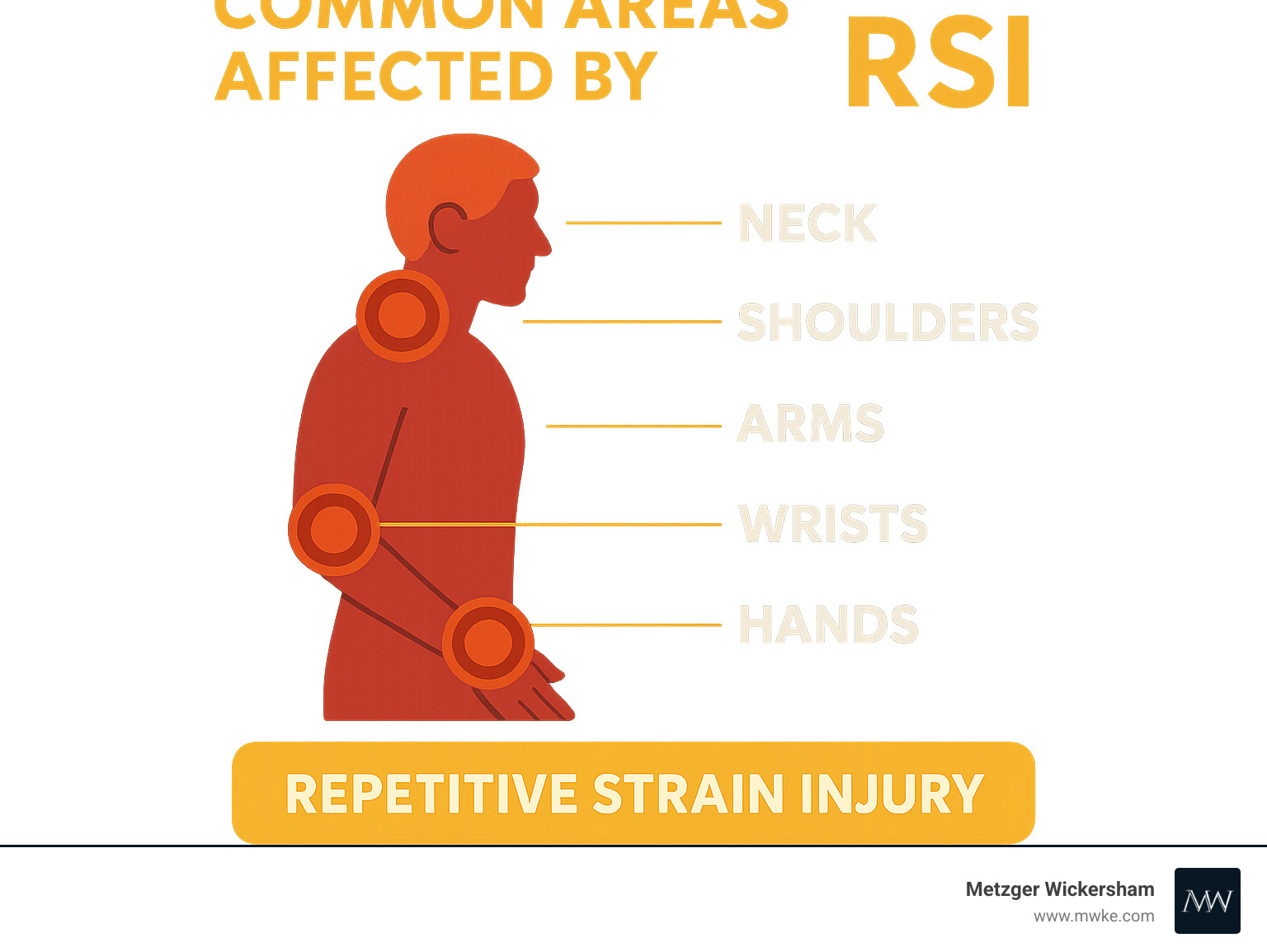
Repetitive Strain Injury (RSI) is not a single condition but an umbrella term for a range of issues affecting your muscles, tendons, and nerves. Also known as Upper Limb Disorders (ULDs), these injuries develop from repetitive motions, excessive force, awkward postures, or constant pressure or vibration. Exposure to cold temperatures can also worsen these conditions.
Symptoms of RSI are varied and can include pain (from a dull ache to sharp throbbing), tenderness, and stiffness in the affected area. Many people also experience numbness or tingling (‘pins and needles’), weakness in performing tasks, uncomfortable cramping, or a throbbing sensation. Visible swelling around the joints may also occur. These signs typically worsen during the triggering activity and may improve with rest. If left unaddressed, these symptoms can become chronic and severely impact daily life.
In the workplace, these injuries often stem from a few common culprits. Think about repetitive tasks – like constant typing, scanning items at a checkout, or working on an assembly line. Awkward postures play a big role too, such as keeping your wrists bent for hours, reaching overhead, or twisting your neck. Often, it’s a matter of poor ergonomics, where your workstation just isn’t set up right for your body, causing unnecessary strain. Then there are vibrating tools, like those used in construction, and jobs requiring forceful exertions, like repeatedly lifting heavy things.
This is why certain jobs unfortunately carry a higher risk. You’ll often find RSI among office workers, especially those doing lots of data entry or typing without good breaks or ergonomic setups. Factory and assembly line workers are also highly susceptible due to continuous, repetitive motions. Construction workers face risks from vibrating tools and heavy lifting. Even hairdressers, with their constant arm and wrist movements, musicians playing instruments for long stretches, and cleaners with their repetitive bending and reaching, can develop RSI.
If you’re curious to learn more about the symptoms of RSI and ways to treat them, the NHS guide on Repetitive Strain Injury (RSI) offers some helpful information.
Specific RSI Conditions
While ‘RSI’ is a general term, it actually covers several more specific medical conditions, each with its own characteristics. Here are some of the most common ones you might hear about:
Carpal Tunnel Syndrome: This happens when there’s pressure on the median nerve in your wrist, often from repetitive tasks or vibration. It can cause numbness, tingling, and weakness in your hand and fingers.
Tendonitis: This is simply inflammation of a tendon, which is the tough cord that connects your muscle to your bone. It’s often found in the wrist, elbow, or shoulder from overuse.
Tennis Elbow (Epicondylitis): Don’t let the name fool you – you don’t have to play tennis to get this! It’s pain on the outside of your elbow, often caused by repetitive gripping or wrist movements, and it’s common in many professions.
Bursitis: This condition involves inflammation of a bursa, which is a small, fluid-filled sac that acts as a cushion around your joints. It can show up in your shoulder, elbow, or hip due to repetitive motion.
Hand-Arm Vibration Syndrome (HAVS): This is a group of conditions caused by using vibrating tools for long periods. It can affect the blood vessels, nerves, and joints in your hands and arms, sometimes leading to symptoms like ‘Vibration White Finger’ (VWF).
The Impact on Your Life
Living with an RSI goes beyond physical discomfort. A minor ache can develop into chronic pain, making daily tasks like driving, dressing, or cooking painful challenges. The inability to work effectively can lead to significant financial strain from lost income and medical bills. The impact is also mental and emotional; constant pain can be isolating and frustrating, often leading to conditions like anxiety or depression. At Metzger Wickersham, we understand that your well-being includes both your physical and emotional health, and we are here to help you get the comprehensive support you need.
Employer Responsibilities and Grounds for a Claim
When you head to work, you expect a safe place to be. This isn’t just a hopeful thought; it’s a fundamental legal duty that employers have. They’re bound by various health and safety regulations, including those from OSHA, to make sure their workplace is safe for everyone. This means they have a “duty of care” towards you.
What does this duty involve? A lot! It includes things like conducting risk assessments to spot potential hazards, especially those that could lead to an RSI. They also need to implement control measures, which means actually doing something about those risks. This could be as simple as adjusting a workstation height, providing better equipment like ergonomic keyboards, or even changing how tasks are assigned.
Beyond equipment, employers are responsible for providing proper training on safe working practices, good posture, and how to use tools correctly. They should also teach you how to spot the early warning signs of an RSI. And just as important, they need to ensure you get adequate breaks from repetitive tasks. These breaks give your muscles and tendons a chance to rest and recover. Sometimes, they might even rotate tasks so you’re not doing the same thing all day long. Finally, they must respond to your concerns if you report discomfort or symptoms, investigating them quickly and seriously.
Proving Employer Negligence
So, when can you file a claim? If your employer falls short on these duties, and their negligence directly causes or significantly contributes to your RSI, you might have strong grounds for a compensation claim. It’s important to remember that this claim typically isn’t against your employer personally. Instead, it’s usually handled by their employer’s liability insurance. Understanding your rights after a workplace injury can feel overwhelming, but that’s where help comes in. For more general information, you can always look at our Workplace Injury Advice resources.
To make a successful RSI claim, we need to show that your employer was negligent. This means proving they failed in their duty of care, and that failure directly led to your injury. Here are some common examples of employer negligence:
Failure to Act: Your employer knew about the risks of repetitive tasks but didn’t do anything to reduce them.
Ignoring Complaints: You told your employer about pain or discomfort, but they brushed it off or didn’t make necessary changes.
No Risk Assessment: They didn’t regularly check for risks from repetitive tasks, or they ignored the findings from such checks.
Poor Training: They didn’t give you enough training on safe work habits, proper posture, or how to use ergonomic equipment.
Unsafe Work Practices: They made you work in awkward positions, stay still for too long, or didn’t give you enough breaks.
Bad Equipment: They provided tools or workstations that actually made strain worse, instead of better.
Excessive Workloads: They pushed you to work too fast or for too long without enough rest.
Missing Safety Gear: They didn’t provide necessary protective equipment, especially when using vibrating tools.
For example, sometimes an employer might offer a general safety course once, years ago, but not provide practical training for the actual tasks you do every day. This often isn’t enough to protect them if you get hurt. Our role, as your repetitive strain injury solicitors, is to carefully gather all the evidence. This helps us show how your employer’s actions, or their lack of action, directly contributed to your RSI.
The RSI Claim Process: Key Steps to Take
If you suspect your work is causing a repetitive strain injury, it’s crucial to act quickly. Ignoring RSI can lead to more significant, long-term health problems. The process can feel overwhelming when you’re in pain, but we can guide you through the key steps.
First things first, seek medical attention right away. As soon as you notice symptoms, see your doctor. An early diagnosis is crucial for your health and helps build a clear connection between your condition and your work. Your medical records will become a very important piece of evidence.
Next, you’ll want to report your injury to your employer. Inform your manager or supervisor in writing as soon as possible. It’s important that your injury is recorded in the company’s official accident report book to create an official record.
While you’re doing all this, make sure to document everything. Keep a detailed log of your symptoms: when they started, how they feel, and how they affect your daily activities. This personal diary can be incredibly helpful.
And speaking of documentation, start gathering evidence. This can include photos or videos of your workstation, tools, and yourself performing tasks that cause pain. If anyone else saw what happened or has similar issues, note their contact information as potential witnesses.
Finally, remember there are time limits for these kinds of claims. In Pennsylvania, for example, there’s generally a two-year statute of limitations for personal injury claims, including RSI cases. This means you typically have two years from when you knew, or should have known, that your injury was work-related to file a lawsuit. Acting quickly is the best way to protect your legal rights.
What Evidence is Needed for an RSI Claim?
Building a strong RSI claim relies on gathering the right evidence. We can help you organize what’s needed, which typically includes:
Medical Records: Your doctor’s diagnosis, treatment plans, prescriptions, and specialist referrals are critical to document the nature and severity of your injury.
Photos or Videos of Your Workstation and Tasks: Visual evidence of your working conditions, equipment, and tasks can demonstrate poor ergonomics or repetitive movements.
Witness Statements: Statements from colleagues who observed your work conditions or symptoms can provide valuable support.
Symptom Diary: Your personal log detailing the onset, progression, and impact of your symptoms helps link the injury to your work.
Records of Lost Wages: Documentation of any income lost due to missed work or reduced hours because of your RSI.
Receipts for Medical Expenses: All bills for treatment, including doctor visits, physical therapy, medication, and specialized equipment.
Employer Records: Documents such as risk assessments, training logs, and any communication with your employer about your injury or requests for changes.
Why You Should Consult with Repetitive Strain Injury Solicitors
Dealing with an RSI claim can be complicated, especially while managing pain. That’s why reaching out to experienced repetitive strain injury solicitors is a smart move. We can make a world of difference:
We’ll offer you clear legal guidance, explaining your rights and legal options in simple terms.
We can help with claim evaluation, giving you an honest idea of what your claim might be worth based on your injury and losses.
We provide essential evidence collection support. Gathering documents like medical records and witness statements can be a huge task. We’ll guide you through it.
We’re here for navigating legal deadlines. Missing strict time limits can mean losing your chance to file. We’ll ensure all paperwork is filed correctly and on time.
Most importantly, we’re dedicated to protecting your rights. We’ll be your strong advocate, handling conversations with your employer and their insurance company to ensure your rights are protected.
If you’re curious about why having legal representation is so beneficial in general, you can learn more by checking out our page on Reasons to Hire a Personal Injury Lawyer.
Navigating Compensation and Legal Fees with Repetitive Strain Injury Solicitors
When you’re dealing with a work-related Repetitive Strain Injury (RSI), our main goal is to help you recover compensation. This compensation is meant to cover all the losses and suffering you’ve experienced because of your injury. Think of it as making things right, financially, for what you’ve gone through.
This compensation generally falls into two main types. First, there are Economic Damages, which you might also hear called Special Damages. These are the easily measurable financial losses directly linked to your injury. This includes things like:
Medical Bills: Covering all your past and future costs for doctor visits, tests, medications, physical therapy, and any surgeries you might need.
Lost Wages: This accounts for the income you’ve already missed out on because you couldn’t work, or had to work fewer hours.
Loss of Earning Capacity: This looks ahead, compensating you for any future income you might lose if your RSI permanently impacts your ability to work, or if it forces you into a lower-paying job.
Other Out-of-Pocket Expenses: Like the cost of travel to medical appointments, any special equipment you need, or even changes to your home if your injury requires them.
Then, there are Non-Economic Damages, often called General Damages. These cover the less tangible, non-monetary parts of your suffering. While they are harder to put a price tag on, they are just as real and important. These include:
Pain and Suffering: Compensation for the physical discomfort and the emotional distress your injury has caused.
Loss of Enjoyment of Life: This accounts for how your RSI has reduced your ability to participate in hobbies, social activities, or even simple daily tasks that you once enjoyed.
We understand that thinking about legal fees can add another layer of worry when you’re already injured. That’s why many repetitive strain injury solicitors work on a contingency fee basis. What does this mean for you? Simply put, you won’t pay us any legal fees upfront. Instead, our fees are a percentage of the compensation we successfully secure for you. And if we don’t win your case, you generally won’t owe us any attorney fees. This approach allows you to pursue justice and focus on your recovery without added financial stress.
How is RSI Compensation Calculated?
There is no fixed formula or simple calculator for RSI compensation. Each case is unique, and the amount is determined on an individual basis.
Several factors are considered, including the severity of your injury (such as a diagnosed Type 1 RSI like Carpal Tunnel Syndrome or a non-specific Type 2 RSI) and its impact on your daily life and work. We also evaluate your documented financial losses, including medical expenses and lost wages. Crucial evidence includes medical reports and the future prognosis from doctors, which outline your recovery path and future needs. The extent of your employer’s negligence is also a key factor.
Settlements can range from a few thousand dollars for minor cases to significantly more for chronic injuries with a major financial impact. We will review your specific circumstances to give you a clear understanding of what your claim could be worth.
Frequently Asked Questions about RSI Claims
It’s completely normal to have questions and concerns when you’re thinking about making a claim for a work-related Repetitive Strain Injury. You might be worried about your job, or how your existing health might play a role. We want to clear up some of the most common questions we hear, so you can feel more confident about your path forward.
Can I be fired for making an RSI claim against my employer?
This is a common concern, but you can generally not be legally fired or face retaliation for making a legitimate personal injury or workers’ compensation claim for a work-related RSI. Laws protect injured workers from unlawful termination or retaliation. It is also important to remember that compensation is typically paid by the employer’s liability insurance, not directly from the company’s funds, so a claim may not affect their finances in the way some fear.
What if my RSI aggravated a pre-existing condition?
Even if your Repetitive Strain Injury aggravated a pre-existing condition, the answer is a clear yes, you can still make a claim. Employers have a fundamental duty to keep all their employees safe, and this includes those who might have existing vulnerabilities or health conditions.
If your work activities, due to your employer’s negligence, made a pre-existing condition worse or caused it to flare up, they can still be held responsible. Your repetitive strain injury solicitors will work to establish how your work environment specifically contributed to the worsening or acceleration of your condition. It’s about proving that the work environment directly caused the aggravation of your symptoms, even if the underlying condition was already there.
Will I need a medical expert to confirm my condition for a claim?
In most cases, yes, a medical professional is needed to confirm your condition and link it to your work. While your own doctor’s records are important, an independent medical examination (IME) is often a necessary step. A medical expert provides an objective report that:
Confirms your RSI diagnosis.
Establishes the causal link between your work and your injury.
Documents the severity of your condition.
Gives an opinion on your prognosis and any long-term impact on your health and ability to work.
This strong medical evidence is vital for proving your claim and securing appropriate compensation.
How Metzger Wickersham Can Assist with Your Claim
If you’re struggling with a repetitive strain injury that you believe is connected to your work, taking action is a really important step. It’s about moving toward your recovery and making sure your future is secure. We know that trying to understand all your legal rights can feel overwhelming, especially when you’re in pain. But here’s the good news: you absolutely don’t have to face this journey alone.
At Metzger Wickersham, we’ve been helping people with personal injury cases for over 135 years. We serve clients all across Pennsylvania, including cities like Harrisburg, Pottsville, Lancaster, Shippensburg, Wilkes-Barre, Williamsport, and York. We also assist folks in Frederick, Maryland. Our main focus is you, our client. We have a dedicated team who work together on every single case, ensuring you get the comprehensive support you need. We’re here for our clients 24/7, because we understand that injuries and questions don’t just pop up during business hours.
We offer a free consultation to talk about your unique situation. This means you can chat with us, share your story, and learn about your options without any cost or obligation. Plus, we often work on a contingency fee basis, which means there are no upfront fees for you. We only get paid if we successfully recover compensation for you.
Our main goal is to help you get the justice you deserve and the fair compensation that can truly make a difference in your life after an injury caused by someone else’s negligence. We have a long history of helping individuals pursue this fair compensation, and we’re ready to put our experience to work for you. When you’re looking for dedicated repetitive strain injury solicitors, we’re here to guide you.
We invite you to learn more about our approach to Workers’ Compensation cases and how we can support you through this challenging time. Reach out to us today to discuss your repetitive strain injury claim. Let’s explore together how we can help you move forward.
 Skip to content

 Symptoms of RSI are varied and can include pain (from a dull ache to sharp throbbing), tenderness, and stiffness in the affected area. Many people also experience numbness or tingling (‘pins and needles’), weakness in performing tasks, uncomfortable cramping, or a throbbing sensation. Visible swelling around the joints may also occur. These signs typically worsen during the triggering activity and may improve with rest. If left unaddressed, these symptoms can become chronic and severely impact daily life.
In the workplace, these injuries often stem from a few common culprits. Think about repetitive tasks – like constant typing, scanning items at a checkout, or working on an assembly line. Awkward postures play a big role too, such as keeping your wrists bent for hours, reaching overhead, or twisting your neck. Often, it’s a matter of poor ergonomics, where your workstation just isn’t set up right for your body, causing unnecessary strain. Then there are vibrating tools, like those used in construction, and jobs requiring forceful exertions, like repeatedly lifting heavy things.
This is why certain jobs unfortunately carry a higher risk. You’ll often find RSI among office workers, especially those doing lots of data entry or typing without good breaks or ergonomic setups. Factory and assembly line workers are also highly susceptible due to continuous, repetitive motions. Construction workers face risks from vibrating tools and heavy lifting. Even hairdressers, with their constant arm and wrist movements, musicians playing instruments for long stretches, and cleaners with their repetitive bending and reaching, can develop RSI.
If you’re curious to learn more about the symptoms of RSI and ways to treat them, the NHS guide on Repetitive Strain Injury (RSI) offers some helpful information.
Symptoms of RSI are varied and can include pain (from a dull ache to sharp throbbing), tenderness, and stiffness in the affected area. Many people also experience numbness or tingling (‘pins and needles’), weakness in performing tasks, uncomfortable cramping, or a throbbing sensation. Visible swelling around the joints may also occur. These signs typically worsen during the triggering activity and may improve with rest. If left unaddressed, these symptoms can become chronic and severely impact daily life.
In the workplace, these injuries often stem from a few common culprits. Think about repetitive tasks – like constant typing, scanning items at a checkout, or working on an assembly line. Awkward postures play a big role too, such as keeping your wrists bent for hours, reaching overhead, or twisting your neck. Often, it’s a matter of poor ergonomics, where your workstation just isn’t set up right for your body, causing unnecessary strain. Then there are vibrating tools, like those used in construction, and jobs requiring forceful exertions, like repeatedly lifting heavy things.
This is why certain jobs unfortunately carry a higher risk. You’ll often find RSI among office workers, especially those doing lots of data entry or typing without good breaks or ergonomic setups. Factory and assembly line workers are also highly susceptible due to continuous, repetitive motions. Construction workers face risks from vibrating tools and heavy lifting. Even hairdressers, with their constant arm and wrist movements, musicians playing instruments for long stretches, and cleaners with their repetitive bending and reaching, can develop RSI.
If you’re curious to learn more about the symptoms of RSI and ways to treat them, the NHS guide on Repetitive Strain Injury (RSI) offers some helpful information.
 First things first, seek medical attention right away. As soon as you notice symptoms, see your doctor. An early diagnosis is crucial for your health and helps build a clear connection between your condition and your work. Your medical records will become a very important piece of evidence.
Next, you’ll want to report your injury to your employer. Inform your manager or supervisor in writing as soon as possible. It’s important that your injury is recorded in the company’s official accident report book to create an official record.
While you’re doing all this, make sure to document everything. Keep a detailed log of your symptoms: when they started, how they feel, and how they affect your daily activities. This personal diary can be incredibly helpful.
And speaking of documentation, start gathering evidence. This can include photos or videos of your workstation, tools, and yourself performing tasks that cause pain. If anyone else saw what happened or has similar issues, note their contact information as potential witnesses.
Finally, remember there are time limits for these kinds of claims. In Pennsylvania, for example, there’s generally a two-year statute of limitations for personal injury claims, including RSI cases. This means you typically have two years from when you knew, or should have known, that your injury was work-related to file a lawsuit. Acting quickly is the best way to protect your legal rights.
First things first, seek medical attention right away. As soon as you notice symptoms, see your doctor. An early diagnosis is crucial for your health and helps build a clear connection between your condition and your work. Your medical records will become a very important piece of evidence.
Next, you’ll want to report your injury to your employer. Inform your manager or supervisor in writing as soon as possible. It’s important that your injury is recorded in the company’s official accident report book to create an official record.
While you’re doing all this, make sure to document everything. Keep a detailed log of your symptoms: when they started, how they feel, and how they affect your daily activities. This personal diary can be incredibly helpful.
And speaking of documentation, start gathering evidence. This can include photos or videos of your workstation, tools, and yourself performing tasks that cause pain. If anyone else saw what happened or has similar issues, note their contact information as potential witnesses.
Finally, remember there are time limits for these kinds of claims. In Pennsylvania, for example, there’s generally a two-year statute of limitations for personal injury claims, including RSI cases. This means you typically have two years from when you knew, or should have known, that your injury was work-related to file a lawsuit. Acting quickly is the best way to protect your legal rights.
 We understand that thinking about legal fees can add another layer of worry when you’re already injured. That’s why many repetitive strain injury solicitors work on a contingency fee basis. What does this mean for you? Simply put, you won’t pay us any legal fees upfront. Instead, our fees are a percentage of the compensation we successfully secure for you. And if we don’t win your case, you generally won’t owe us any attorney fees. This approach allows you to pursue justice and focus on your recovery without added financial stress.