Understanding Your Rights: Repetitive Strain Workers’ Comp
Are Repetitive Strain Injuries (RSIs) covered by workers’ compensation?
Yes, in Pennsylvania and many other states, repetitive strain workers comp can cover injuries that develop over time from work activities.
Key points:
RSIs are considered workplace injuries if caused or worsened by your job.
This includes conditions like carpal tunnel syndrome, tendonitis, and bursitis.
Even pre-existing conditions aggravated by work may be covered.
Proving work-relatedness for RSIs can be complex, often requiring strong medical evidence.
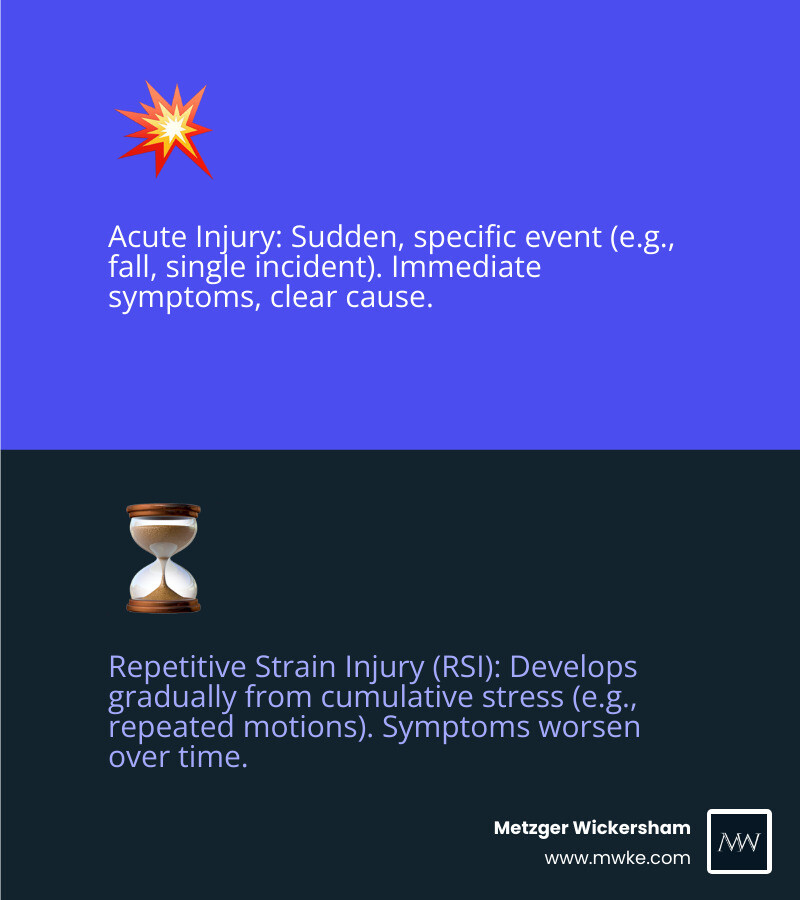
Your elbow might ache. Your wrist might throb. It’s not from a sudden fall. It’s from doing the same thing, day in and day out. These are called Repetitive Strain Injuries (RSIs). They build up over time.
Most people think work injuries are instant. A fall. A broken bone. But RSIs are different. They show up slowly. They might start as a small discomfort. Then they grow into real pain. This makes them tricky for workers’ compensation claims.
Insurers often push back. They want to know: Was it really your job? Or something else? This guide breaks down what you need to know. Especially if you’re in Pennsylvania.
What is a Repetitive Strain Injury (RSI)?
When we think about injuries at work, our minds often picture something sudden. Maybe a slip and fall, or a machine accident. But many common and painful health issues aren’t from a single “oops!” moment. Instead, they build up over time. They’re the result of doing the same motions again and again, day after day. These are called Repetitive Strain Injuries (RSIs).
At their heart, RSIs are musculoskeletal disorders. That’s a fancy way of saying they affect your muscles, bones, and joints. You might also hear them called overuse injuries, repetitive motion injuries, or cumulative trauma disorders. They happen when your nerves, tendons, and muscles are put under stress repeatedly. Maybe it’s from making the same motions, holding an awkward position, or doing something forceful without enough rest. Think of it like tiny, ongoing damage to your body’s parts. This leads to swelling, pain, and sometimes lasting problems. Unlike a sudden accident, an RSI starts slowly. It often begins with small aches that get worse over weeks, months, or even years. This slow start is exactly what makes them tricky to spot and, later, to claim under repetitive strain workers comp.
Common Types and Symptoms of RSIs
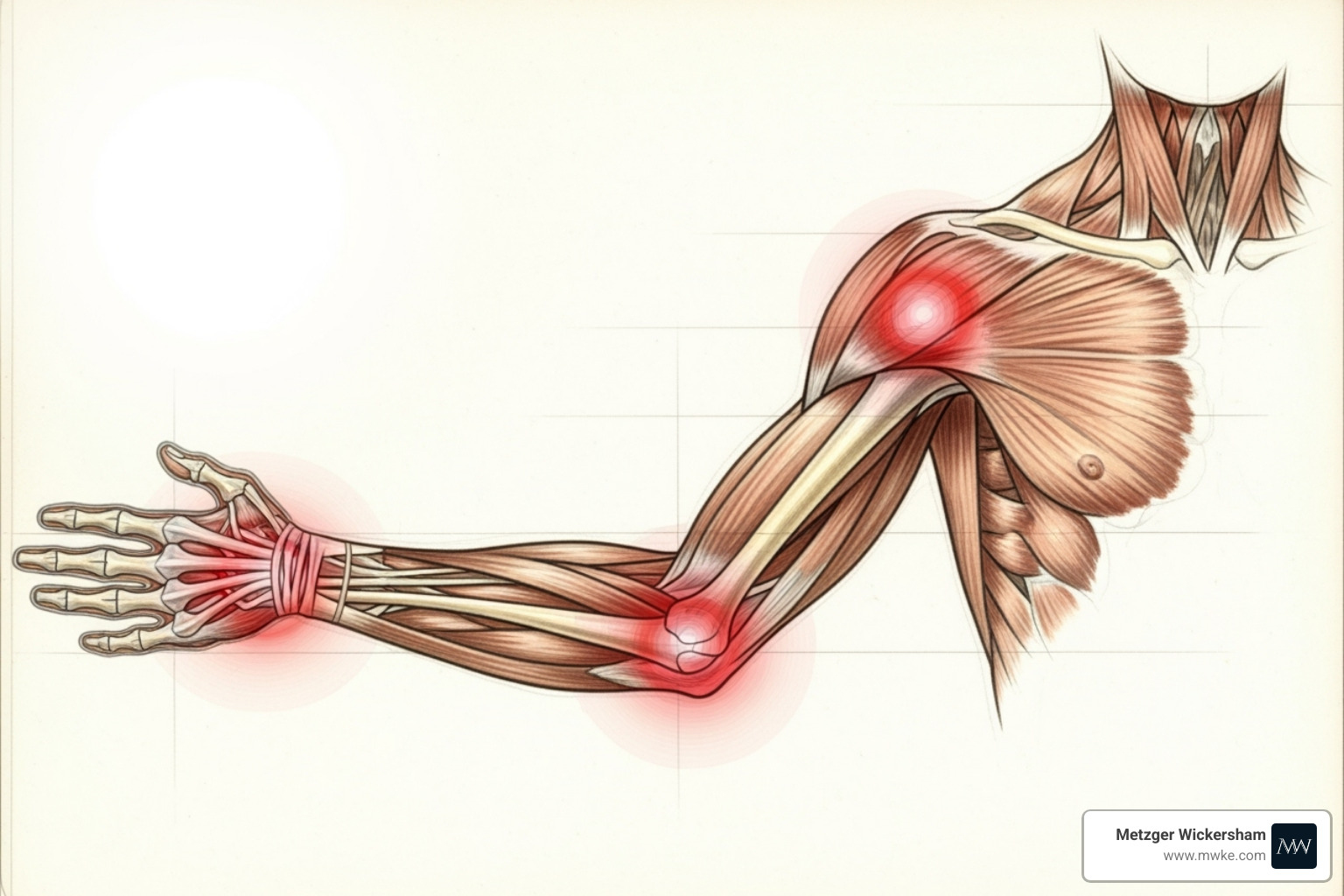
RSIs can pop up almost anywhere you use your body over and over. But they’re most common in the arms, hands, neck, and shoulders. Here are some of the types we see most often:
Carpal Tunnel Syndrome: This is very well-known. It happens when a nerve in your wrist (the median nerve) gets squeezed. Symptoms often include tingling, numbness, weakness, or pain in your hand and fingers, especially your thumb, index, and middle fingers. It can make it hard to grip things.
Tendinitis: This means a tendon (the cord that connects muscle to bone) is irritated or swollen. Common forms include:
Tennis Elbow: Pain on the outside of your elbow, often from repeating wrist movements.
Golfer’s Elbow: Pain on the inside of your elbow, usually from repeating wrist bending motions.
Rotator Cuff Tendinitis: Swelling in the shoulder tendons, often from repeated movements over your head.
Bursitis: This is when a bursa (a small, fluid-filled sac that cushions joints) gets swollen. It often affects the shoulder, elbow, and hip, causing pain and swelling when you move.
Thoracic Outlet Syndrome (TOS): This is a group of issues that happen when blood vessels or nerves between your collarbone and first rib get squeezed. You might feel pain in your neck and shoulder, numbness in your fingers, or weakness in your arm.
Trigger Finger/Thumb: In this condition, a finger or your thumb gets stuck bent, then snaps straight. It’s due to swelling around the tendon.
Beyond these specific conditions, how can you tell if you have an RSI? The general symptoms can include:
Pain, which can be a dull ache or sharp and shooting.
Tingling or numbness, like pins and needles.
Weakness, making it hard to hold things.
Stiffness or less movement than usual.
Swelling or tenderness in the painful spot.
A throbbing or burning feeling.
These symptoms can be sneaky. We might ignore a little tingling, thinking our hand just “fell asleep.” Or a dull ache might be dismissed as “just getting older.” But paying attention to these early signs is super important for your health and for a possible repetitive strain workers comp claim down the road.
Jobs and Activities That Pose a High Risk
While anyone can get an RSI, some jobs and activities really boost your chances. This is because they involve lots of repetition, awkward body positions, or using vibrating tools. Did you know that in 2020, musculoskeletal disorders accounted for 30% of all nonfatal workplace injuries involving days away from work? That shows just how common these injuries are, with repeated stress being a main cause.
Here are some types of jobs that often lead to RSIs:
Office Work: Think about all the typing, mouse clicking, and sitting still at a desk. People doing data entry, administrative tasks, or writing often get carpal tunnel syndrome, neck pain, and shoulder problems. A typist might hit keys 12,000 times an hour! That’s a lot of repetition.
Assembly Line and Manufacturing: Workers here often do the exact same movements hundreds or thousands of times in a shift. This can lead to tendinitis, bursitis, and carpal tunnel syndrome in their hands, wrists, and shoulders.
Construction and Trades: Plumbers, electricians, carpenters, and painters lift, hammer, twist, and work in strange positions (like reaching overhead). This can cause tendinitis, bursitis, and various back, shoulder, and elbow issues. Using vibrating tools like jackhammers also greatly increases the risk.
Healthcare: Nurses, dental hygienists, and aides often do repetitive tasks. This includes moving patients, giving shots, and doing precise hand procedures. This puts them at risk for back, shoulder, and wrist RSIs.
Retail and Food Preparation: Cashiers repeatedly scan and bag items. Butchers and bakers do repetitive cutting, kneading, and lifting. These jobs often lead to wrist, hand, and shoulder problems.
Transportation: Bus drivers, truck drivers, and delivery workers can get RSIs from sitting for long periods, reaching, constantly gripping the steering wheel, and loading/unloading cargo.
The big takeaway here is this: almost any job that involves a lot of repeated tasks, awkward body positions, or forceful actions can cause an RSI. It’s not just about lifting heavy things. It’s about the steady build-up from seemingly small movements over time.
Navigating the Pennsylvania Repetitive Strain Workers Comp Process
So, you’re dealing with a repetitive strain injury (RSI). It’s frustrating, painful, and it impacts your daily life. And when it comes to getting it covered by workers’ compensation, it can feel like you’re facing an uphill battle. Why? Because repetitive strain workers comp claims are a bit different from a broken bone or a sudden fall.
Think about it: a broken bone has a clear date and time it happened. An RSI, however, creeps up on you. It’s a gradual thing, building over weeks, months, or even years. This gradual onset is the first big hurdle. It makes it tough to pinpoint the “exact moment” of injury, which is what insurance companies often look for. The burden of proof, or showing that your job caused your injury, falls squarely on your shoulders.
Insurance companies are often quick to push back. They might suggest your injury came from a hobby, an old injury, or just getting older. They’re looking for reasons to deny your claim. They might argue it’s not work-related at all. This is where understanding the system, especially Pennsylvania’s Workers’ Compensation Act, becomes incredibly important. Just like with any other personal injury case, knowing how to tackle these disputes can make all the difference. We know their playbook and how to respond.
Key Steps to Take for Your RSI Claim
If you think your work has caused or worsened an RSI, taking the right steps, and taking them quickly, is vital. It helps protect your rights and builds a strong case for your repetitive strain workers comp claim in Pennsylvania.
First, report your symptoms to your employer right away. Even if it’s just a nagging ache, tell them as soon as you suspect it’s work-related. In Pennsylvania, you generally have 120 days from the moment you realize your injury is connected to your job to give notice. Don’t wait! It’s best to do this in writing and keep a copy for yourself. This creates a clear record.
Next, seek medical attention promptly. Don’t try to “tough it out.” Seeing a doctor is crucial for your health, and it also creates important medical records. Make sure to tell your doctor that you believe your condition is work-related. Explain your job duties in detail, especially the repetitive tasks that you think are contributing to the problem. Be aware that for the first 90 days after you report your injury, your employer might ask you to see a doctor from a specific list they provide (at least six doctors). After 90 days, or if they don’t give you a list, you’re free to choose your own doctor.
Perhaps the most important step for an RSI claim is to document your job duties and symptoms thoroughly.
Job Duties: Write down a detailed list of your daily work tasks. Focus on the repetitive motions, awkward positions, or forceful actions. How long do you do these tasks? How often? What tools or equipment do you use? The more detail, the better.
Symptom Journal: Keep a daily log of your symptoms. Note when they happen, how bad they are, how they affect your ability to work or do things at home, and if anything makes them better or worse (like rest or medication). This journal helps show how your injury developed gradually over time.
Finally, if your employer or their insurance company denies your claim or doesn’t start your benefits, you’ll need to file a formal Claim Petition with the Pennsylvania Bureau of Workers’ Compensation. There’s a 3-year statute of limitations for filing this petition. This means you usually have three years from when you first experienced disability due to the RSI. However, because RSIs develop slowly, figuring out the “date of injury” can be tricky. It’s often considered the date you knew, or should have known, your injury was work-related and causing disability. That’s why acting quickly is so important!
Proving Your Case for Repetitive Strain Workers Comp
Winning a repetitive strain workers comp claim often comes down to building a strong case that clearly connects your injury to your job. The evidence you gather and the support you have can make all the difference.
The most important piece of the puzzle is medical evidence. You need your doctor’s opinion stating that your condition is “more likely than not” caused or made worse by your work activities. Your doctor’s notes and testimony should:
Clearly explain your diagnosis and how they plan to treat you.
Directly link your job duties to your RSI.
Address any non-work causes or explain how your job made a pre-existing condition worse beyond its normal progression.
Don’t be surprised if the insurance company tries to challenge this. They might send you to an Independent Medical Examination (IME) with a doctor they choose. This doctor might have a different opinion than your own treating physician, and it’s a common tactic used to try and deny your claim.
Besides medical records, other types of evidence can be crucial:
Detailed Records of Your Job Tasks: As we discussed, your own notes about your daily work activities, specific movements, and how your workstation is set up can be very powerful.
Witness Statements: Coworkers who do similar tasks, have seen your work habits, or even have similar symptoms can provide helpful testimony.
Ergonomic Assessments: If an ergonomic assessment of your workspace or job tasks was done, it can objectively show risk factors.
Employment Records: Your job description, work schedule, and any records of overtime can help show how intense and long your exposure to repetitive tasks was.
The goal is to create a clear picture for the workers’ compensation judge: that your specific job tasks directly led to, or significantly worsened, your specific injury. This is precisely where an experienced workplace injury lawyer can step in. They can help you gather, organize, and present all this evidence effectively, giving your claim the best chance possible.
Benefits and Prevention Strategies
Securing repetitive strain workers comp benefits isn’t just about financial assistance; it’s about protecting your long-term health and well-being. These injuries can have a profound impact on your ability to work, your daily life, and even your mental health. By understanding the benefits available and implementing effective prevention strategies, we can work towards a healthier and more secure future.
Benefits Available Through Repetitive Strain Workers Comp
If your repetitive strain workers comp claim is approved in Pennsylvania, you may be entitled to several types of benefits designed to support your recovery and compensate for losses:
Medical Bill Coverage: This is a cornerstone benefit. Workers’ compensation should cover all reasonable and necessary medical expenses related to your RSI. This includes doctor’s visits, diagnostic tests (like MRIs or EMGs), physical or occupational therapy, medications, injections, and even surgery if medically required. There should be no out-of-pocket costs for approved treatments.
Lost Wage Benefits (Temporary Total Disability – TTD): If your RSI prevents you from working, or limits your ability to earn your full wages, you may be eligible for wage loss benefits. In Pennsylvania, these benefits typically amount to about two-thirds (66.67%) of your average weekly wage, up to a state-set maximum. These benefits are paid while you are temporarily unable to work or are working at a reduced capacity due to your injury.
Specific Loss Payments: If your RSI leads to the permanent loss or loss of use of a body part (like a finger, hand, or arm), or affects your hearing or vision, you may be entitled to a specific loss payment. These are statutory benefits paid for a set number of weeks, regardless of whether you’ve returned to work.
Permanent Partial Disability (PPD): Once your medical condition has stabilized and you’ve reached Maximum Medical Improvement (MMI), a doctor may assign you an Impairment Rating Evaluation (IRE). If you have a permanent impairment, you may be eligible for PPD benefits.
Vocational Rehabilitation: If your RSI prevents you from returning to your previous job, workers’ compensation may cover vocational rehabilitation services. This can include job counseling, retraining, and assistance with finding new employment that accommodates your physical limitations.
These benefits are generally not taxable at the state or federal level.
How to Prevent Repetitive Strain Injuries at Work
Prevention is always better than cure, and this holds especially true for RSIs. Both employers and employees have a role to play in creating a healthier and safer work environment.
For Employees:
Pay Attention to Your Body: Don’t ignore early warning signs like tingling, numbness, or minor aches. These are your body’s signals that something needs attention.
Take Regular Breaks: Even short breaks throughout the day can make a big difference. Get up, stretch, walk around, and give your hands, wrists, and eyes a rest. For office workers, aiming for a 5-10 minute break every hour is a good goal.
Practice Good Posture and Technique: Ensure your workstation is set up ergonomically (more on that below). Maintain a neutral posture, keeping your wrists straight, shoulders relaxed, and feet flat on the floor. Use proper lifting techniques.
Stretch and Exercise: Incorporate simple stretches for your wrists, hands, neck, and shoulders into your daily routine. Staying physically active outside of work can also strengthen muscles and improve overall resilience.
For Employers:
Implement Ergonomic Solutions: This is paramount. Ergonomics is the science of designing the workplace to fit the worker, minimizing strain. This includes providing adjustable chairs, keyboards, mice, monitors, and standing desks. For industrial settings, it means designing tools and workstations to reduce awkward postures, excessive force, and vibration. OSHA provides excellent guidance on workplace ergonomic adjustments.
Provide Training: Educate employees on proper posture, lifting techniques, and the importance of breaks.
Encourage Reporting: Foster a culture where employees feel comfortable reporting discomfort or symptoms early, without fear of retaliation. Early intervention can prevent minor issues from becoming debilitating injuries.
Rotate Tasks: Where possible, rotate employees through different tasks to vary the motions and reduce prolonged repetition on a single body part.
Maintain Equipment: Ensure tools and machinery are well-maintained to reduce vibration and force requirements.
By working together, we can significantly reduce the incidence of RSIs and create workplaces where everyone can thrive without enduring preventable pain.
Frequently Asked Questions about RSI Workers’ Comp Claims
Dealing with a repetitive strain workers comp claim can be confusing, and the legal process often adds to the complexity. Here are answers to some of the most common questions we receive:
Can my employer fire me for filing a workers’ comp claim for an RSI?
This is a common and valid worry. The good news is, no.
In Pennsylvania, the law is clear: it is illegal for your employer to punish, demote, or fire you for filing a workers’ compensation claim in good faith. This legal protection ensures you can safely seek the benefits you deserve. If you feel you’re being treated unfairly or retaliated against after filing a claim, it’s important to get legal advice right away to protect your rights.
What if my RSI was caused by a previous job?
This question can make repetitive strain workers comp claims more complex. Since RSIs develop over time, it’s not always clear which job is responsible, especially if you’ve moved between employers.
In Pennsylvania, the law usually holds the last employer responsible. This means if your RSI developed or significantly worsened at your most recent job, that employer would likely be accountable for your benefits. This applies even if you had prior symptoms that the current job aggravated. Proving this connection can be tricky, which is why solid medical records and legal guidance are so important.
Do I have to prove my job was the only cause of my RSI?
This is an important point where many people get confused. Insurance companies may imply you must prove your job was the only cause of your injury, but that is not true.
In Pennsylvania, you do not have to prove your job was the sole cause of your RSI. You only need to show that your work duties were a substantial, contributing factor to your injury. This means your job played a significant role in causing or worsening it. Even if you have a pre-existing condition or non-work activities played a minor part, your claim can still be valid as long as a strong work connection exists. This distinction is key to getting your repetitive strain workers comp claim approved.
Why Legal Guidance is Crucial for Your RSI Claim
Dealing with a repetitive strain workers comp claim can feel like trying to steer a maze while blindfolded, especially when you’re already coping with pain and worry. Unlike a sudden accident, RSIs unfold slowly. This gradual onset often leads to initial denials or tough disputes from insurance companies. This is precisely why having caring legal guidance by your side isn’t just helpful – it’s often essential.
Here’s why having support from a firm like Metzger Wickersham is so important for your RSI claim:
First off, the legal process itself is quite detailed. Workers’ compensation law has specific rules, deadlines, and steps that change from state to state. Our team understands the ins and outs of Pennsylvania’s Workers’ Compensation Act. We know what it takes to prove injuries that develop over time, like RSIs. We can make sure all your paperwork is filed correctly and on time. This helps you avoid common mistakes that could lead to your claim being denied.
Next, you’ll be facing insurance company tactics. Insurance companies are businesses, and their main goal is to pay out as little as possible. They have adjusters and lawyers whose job is to find reasons to deny or reduce claims. They might dig into your past medical records, question if your injury is truly work-related, or suggest that activities outside of work are the real cause. We’re very familiar with these strategies. We can speak up for you, protect your rights, and make sure you’re treated fairly.
We also focus on maximizing your benefits. Without proper legal help, you might not get all the benefits you deserve. We can help you understand the full range of medical coverage available, lost wage benefits, and any possible payments for lasting impairment. Our goal is to fight for the full compensation you need for medical bills, lost income, and how this injury impacts your life in the long run.
Building a strong RSI claim also means gathering and showing the right evidence. This often involves strong medical proof, detailed notes about your job duties, and sometimes, opinions from medical professionals. We can help you work with your doctors to make sure your records clearly back up your claim. We’ll also help gather all the necessary documents to present a solid case.
Then there’s all the paperwork and deadlines. From your first notice to your employer to filing a formal claim and responding to insurance company requests, there are many forms and strict dates to meet. Missing a deadline or making a mistake on paperwork could put your entire claim at risk. We handle all these administrative tasks, freeing you up to focus on what truly matters: your recovery.
Finally, having legal guidance brings peace of mind. Dealing with a work injury is stressful enough. Adding the complexities of a workers’ compensation claim can feel overwhelming. With our team handling your case, you can relax, knowing that dedicated professionals are fighting for your rights. We’re working hard to secure the justice and compensation you deserve. We bring over 135 years of experience to the table, helping our clients through a supportive team approach.
Don’t let the tricky nature of a repetitive strain workers comp claim stop you from seeking the benefits you need. If you’re struggling with an RSI because of your job, we are here to help. Contact us today for a consultation to get help with your Workers’ Compensation claim.
 Skip to content


 Here’s why having support from a firm like Metzger Wickersham is so important for your RSI claim:
First off, the legal process itself is quite detailed. Workers’ compensation law has specific rules, deadlines, and steps that change from state to state. Our team understands the ins and outs of Pennsylvania’s Workers’ Compensation Act. We know what it takes to prove injuries that develop over time, like RSIs. We can make sure all your paperwork is filed correctly and on time. This helps you avoid common mistakes that could lead to your claim being denied.
Next, you’ll be facing insurance company tactics. Insurance companies are businesses, and their main goal is to pay out as little as possible. They have adjusters and lawyers whose job is to find reasons to deny or reduce claims. They might dig into your past medical records, question if your injury is truly work-related, or suggest that activities outside of work are the real cause. We’re very familiar with these strategies. We can speak up for you, protect your rights, and make sure you’re treated fairly.
We also focus on maximizing your benefits. Without proper legal help, you might not get all the benefits you deserve. We can help you understand the full range of medical coverage available, lost wage benefits, and any possible payments for lasting impairment. Our goal is to fight for the full compensation you need for medical bills, lost income, and how this injury impacts your life in the long run.
Building a strong RSI claim also means gathering and showing the right evidence. This often involves strong medical proof, detailed notes about your job duties, and sometimes, opinions from medical professionals. We can help you work with your doctors to make sure your records clearly back up your claim. We’ll also help gather all the necessary documents to present a solid case.
Then there’s all the paperwork and deadlines. From your first notice to your employer to filing a formal claim and responding to insurance company requests, there are many forms and strict dates to meet. Missing a deadline or making a mistake on paperwork could put your entire claim at risk. We handle all these administrative tasks, freeing you up to focus on what truly matters: your recovery.
Finally, having legal guidance brings peace of mind. Dealing with a work injury is stressful enough. Adding the complexities of a workers’ compensation claim can feel overwhelming. With our team handling your case, you can relax, knowing that dedicated professionals are fighting for your rights. We’re working hard to secure the justice and compensation you deserve. We bring over 135 years of experience to the table, helping our clients through a supportive team approach.
Don’t let the tricky nature of a repetitive strain workers comp claim stop you from seeking the benefits you need. If you’re struggling with an RSI because of your job, we are here to help. Contact us today for a consultation to get help with your Workers’ Compensation claim.
Here’s why having support from a firm like Metzger Wickersham is so important for your RSI claim:
First off, the legal process itself is quite detailed. Workers’ compensation law has specific rules, deadlines, and steps that change from state to state. Our team understands the ins and outs of Pennsylvania’s Workers’ Compensation Act. We know what it takes to prove injuries that develop over time, like RSIs. We can make sure all your paperwork is filed correctly and on time. This helps you avoid common mistakes that could lead to your claim being denied.
Next, you’ll be facing insurance company tactics. Insurance companies are businesses, and their main goal is to pay out as little as possible. They have adjusters and lawyers whose job is to find reasons to deny or reduce claims. They might dig into your past medical records, question if your injury is truly work-related, or suggest that activities outside of work are the real cause. We’re very familiar with these strategies. We can speak up for you, protect your rights, and make sure you’re treated fairly.
We also focus on maximizing your benefits. Without proper legal help, you might not get all the benefits you deserve. We can help you understand the full range of medical coverage available, lost wage benefits, and any possible payments for lasting impairment. Our goal is to fight for the full compensation you need for medical bills, lost income, and how this injury impacts your life in the long run.
Building a strong RSI claim also means gathering and showing the right evidence. This often involves strong medical proof, detailed notes about your job duties, and sometimes, opinions from medical professionals. We can help you work with your doctors to make sure your records clearly back up your claim. We’ll also help gather all the necessary documents to present a solid case.
Then there’s all the paperwork and deadlines. From your first notice to your employer to filing a formal claim and responding to insurance company requests, there are many forms and strict dates to meet. Missing a deadline or making a mistake on paperwork could put your entire claim at risk. We handle all these administrative tasks, freeing you up to focus on what truly matters: your recovery.
Finally, having legal guidance brings peace of mind. Dealing with a work injury is stressful enough. Adding the complexities of a workers’ compensation claim can feel overwhelming. With our team handling your case, you can relax, knowing that dedicated professionals are fighting for your rights. We’re working hard to secure the justice and compensation you deserve. We bring over 135 years of experience to the table, helping our clients through a supportive team approach.
Don’t let the tricky nature of a repetitive strain workers comp claim stop you from seeking the benefits you need. If you’re struggling with an RSI because of your job, we are here to help. Contact us today for a consultation to get help with your Workers’ Compensation claim.

