 Skip to content
 Claim Your Due: What You Need to Know About Accident Compensation

Related Posts
Contact Us
Let Our Team Fight For You

Why Understanding Accident Compensation Claims Matters
An accident compensation claim can provide financial recovery when someone else’s negligence causes you harm. Understanding your options helps ensure you receive fair compensation for medical bills, lost wages, and pain and suffering. Key Types of Accident Compensation Claims: - Economic Damages – Medical expenses, lost wages, property damage, future medical costs
- Non-Economic Damages – Pain and suffering, emotional distress, loss of enjoyment of life
- Punitive Damages – Additional compensation for extreme negligence (rare cases)
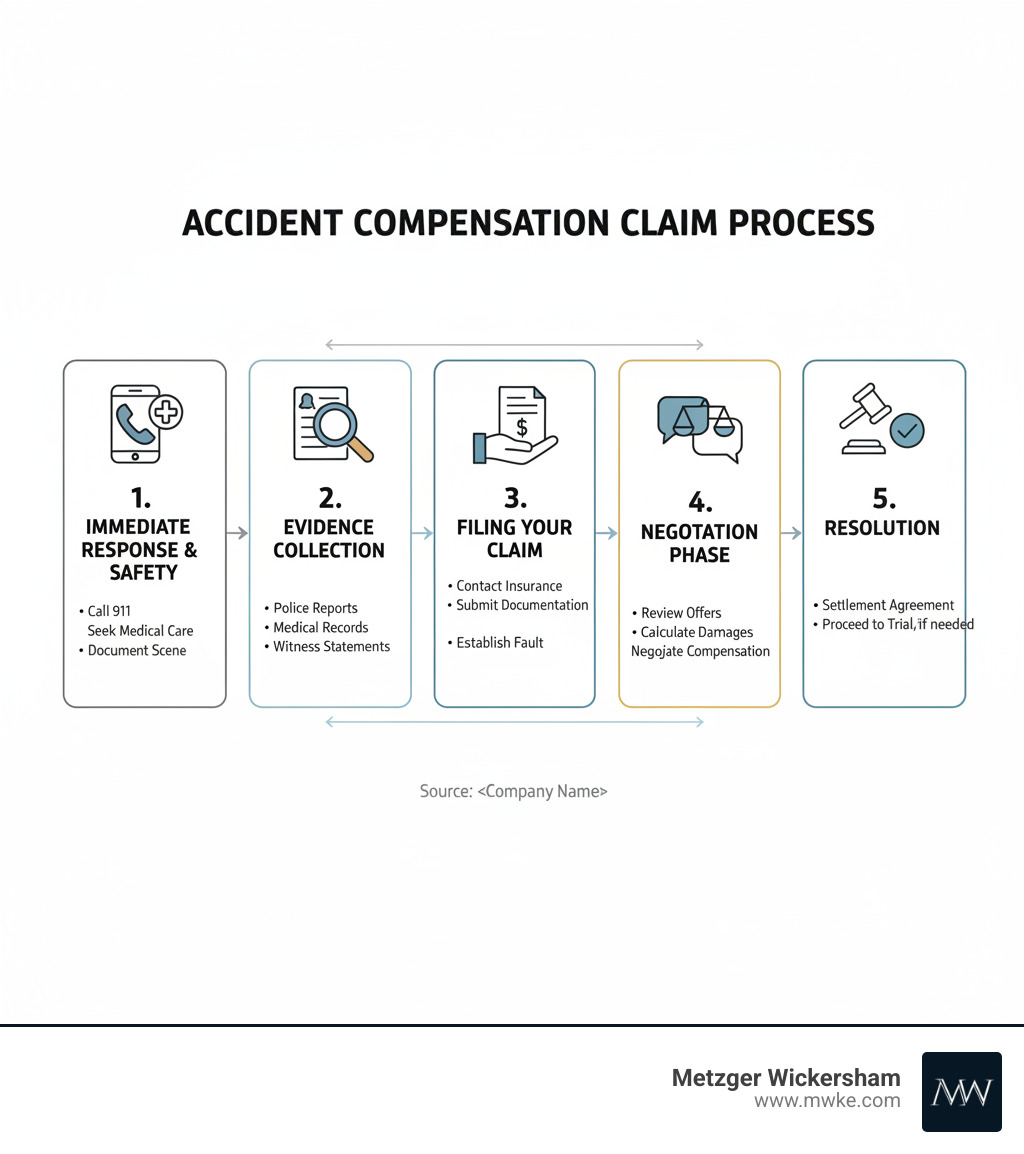
First Steps: What to Do Immediately After an Accident
Your actions in the moments after an accident can have a lasting impact on your health and any future accident compensation claim. While it’s an overwhelming time, try to focus on these critical steps.- Prioritize Safety: If possible, move your vehicle out of traffic and turn on your hazard lights. Your safety is the top priority.
- Call 911: Report the accident immediately. Police will create an official report, and paramedics can assess you for injuries. Adrenaline can mask serious conditions like whiplash or internal injuries, so get checked.
- Seek Medical Attention: Even if you feel fine, see a doctor. This creates an official medical record of your condition right after the crash, which is valuable evidence for your claim.
- Exchange Information: Get the names, phone numbers, insurance details, and vehicle registration numbers from all other drivers involved.
- Document Everything: Use your phone to take photos and videos of vehicle damage, road conditions, traffic signs, skid marks, and any visible injuries. This visual evidence tells a story that words cannot.
- Talk to Witnesses: If anyone saw the accident, get their contact information. Independent eyewitness accounts can be crucial for proving fault.
- Notify Your Insurer: Report the accident to your insurance company as soon as you can. However, be careful about giving detailed statements or admitting any fault before you’ve had a chance to process what happened and consult with a lawyer.
Understanding the Value of Your Accident Compensation Claim
 One of the most pressing questions after an accident is, “What is my case actually worth?” The value of your accident compensation claim depends on the types of damages the law recognizes. Compensation generally falls into two main categories. Economic damages cover your measurable, out-of-pocket financial losses. Non-economic damages compensate you for intangible losses, such as pain and the disruption to your life. A third type, punitive damages, is reserved for rare cases involving extreme recklessness and is meant to punish the wrongdoer. While medical bills are easy to document, they don’t tell the whole story. The inability to enjoy hobbies or the daily struggle with pain are real losses that also deserve compensation. Our Car Accident Compensation Lawyer team understands that every case is unique.
 What Types of Damages Can You Claim?
The financial impact of an accident extends far beyond the initial crash. Your accident compensation claim can include:- Medical Expenses: This covers everything from the ambulance ride and emergency room visit to ongoing physical therapy, prescription medications, and any future medical care your doctor anticipates.
- Lost Wages and Earning Capacity: You can claim compensation for time missed from work while recovering. If your injuries prevent you from returning to your previous job or reduce your ability to earn in the future, that is a compensable loss known as loss of earning capacity.
- Property Damage: This includes the cost to repair or replace your vehicle and any personal items damaged in the crash, such as a laptop or phone. Documentation is key to recovering these monetary losses.
- Pain and Suffering: This legal term refers to the physical pain and discomfort you endure because of your injuries.
- Emotional Distress: Accidents can cause significant mental health challenges, including anxiety, depression, and PTSD. These psychological impacts are a recognized part of your claim.
- Loss of Enjoyment of Life: If your injuries prevent you from participating in hobbies, activities, or family events you once loved, you can be compensated for this loss.
Common Causes and Injuries in Accidents
Most accidents result from someone’s negligence. Understanding the cause is key to establishing responsibility for your accident compensation claim. Common causes include:- Distracted Driving: Texting, eating, or any other activity that takes a driver’s attention off the road.
- Speeding: Exceeding the speed limit or driving too fast for road conditions.
- DUI: Driving under the influence of alcohol or drugs often leads to severe accidents and strong claims.
- Reckless Driving: Aggressive lane changes, tailgating, and running red lights.
- Whiplash: A common neck injury in rear-end collisions that can cause chronic pain.
- Fractures: Broken bones can range from simple breaks to complex injuries requiring multiple surgeries.
- Brain Injuries: Concussions and other traumatic brain injuries can have long-lasting cognitive and emotional effects.
- Catastrophic Injuries: Spinal cord injuries, severe burns, and amputations permanently alter a person’s life and result in the highest compensation amounts.
Building a Strong Case: Evidence, Fault, and Deadlines
 A strong accident compensation claim requires a solid foundation of evidence, a clear understanding of fault, and adherence to critical deadlines. Proving that another party’s negligence caused your injuries is essential, as insurance companies will look for ways to minimize or deny your claim. Pennsylvania’s fault system adds another layer of complexity. The state’s 51% bar rule means if you are found 51% or more responsible for the accident, you cannot recover any compensation. Furthermore, missing the statute of limitations can permanently bar your claim, no matter how strong it is.
 What Evidence Is Needed to Support Your Claim?
Documentation is the backbone of your accident compensation claim. Each piece of evidence helps tell the complete story of what happened and how it affected you.- Police Report: This official, third-party account documents the accident details, witness statements, and often includes a preliminary finding of fault.
- Medical Records: A complete record of your medical care—from emergency room visits to physical therapy—creates a paper trail linking your injuries to the accident.
- Photos and Videos: Images of the crash scene, vehicle damage, and your injuries provide powerful visual evidence.
- Witness Statements: Independent accounts from people who saw the accident can corroborate your version of events and are highly valuable.
- Proof of Lost Income: Pay stubs and letters from your employer quantify the wages you lost due to your injuries.
- Repair Estimates: These documents help establish the severity of the collision by detailing the damage to your vehicle.
How Pennsylvania’s Fault System Affects Compensation
Pennsylvania uses a “modified comparative negligence” system with a 51% bar rule. This rule is critical to your accident compensation claim. Here’s how it works: You can recover damages if you are 50% or less at fault, but your compensation will be reduced by your percentage of fault. For example, if your damages are $100,000 and you are found 20% at fault, you would receive $80,000. However, if you are found 51% or more at fault, you receive nothing. Because of this rule, insurance companies often try to shift blame onto the injured party to reduce or eliminate their payout. They might argue you were speeding, distracted, or could have avoided the crash. The Pennsylvania comparative negligence statute governs these determinations. Fighting unfair fault assignments is crucial, and our Personal Injury Lawyer Lancaster team understands how to steer these complex arguments.Critical Deadlines: The Statute of Limitations
In Pennsylvania, the statute of limitations creates a strict deadline for your accident compensation claim. For most personal injury cases, you have two years from the date of the accident to file a lawsuit. If you miss this deadline, your claim will be barred, regardless of the severity of your injuries or the clarity of the other driver’s fault. While there are limited exceptions—such as for minors or when an injury isn’t immediately discovered (the “discovery rule”)—they are rare in typical accident cases. Be aware that negotiating with an insurance company does not pause the two-year clock. Some adjusters may intentionally delay the process, hoping you’ll miss the deadline. Consulting a lawyer early ensures your rights are protected. While rules can vary for different case types, as discussed in our Statute of Limitations York Medical Malpractice Lawyer resource, the two-year rule for accident claims is firm.Navigating the Claims Process from Start to Finish
After gathering evidence, your accident compensation claim moves into the formal process of seeking compensation. This involves negotiating with insurance companies, who have adjusters and lawyers working to minimize payouts. Understanding how compensation is calculated and what factors can complicate your case is key to making informed decisions.How Is an Accident Compensation Claim Calculated?
Calculating the value of your accident compensation claim involves adding up your concrete financial losses (special damages) and the subjective impacts of your injuries (general damages). Special damages are straightforward and include:- All medical expenses (past and future)
- Lost wages
- Property damage
- Other out-of-pocket costs
What If the At-Fault Driver Is Uninsured?
If the at-fault driver has no insurance, your own policy can provide protection for your accident compensation claim.- Uninsured Motorist (UM) Coverage: This applies when the at-fault driver is uninsured. You file a claim with your own insurance company, which steps in to cover your damages up to your policy limits.
- Underinsured Motorist (UIM) Coverage: This applies when the at-fault driver has insurance, but their policy limits are too low to cover your total damages. Your UIM coverage can pay the difference.
How Pre-existing Conditions Impact Your Claim
A pre-existing condition does not prevent you from filing an accident compensation claim. Pennsylvania follows the “eggshell plaintiff” rule, which means the at-fault party is responsible for the full extent of the harm they cause, even if you were more susceptible to injury. The challenge is proving that the accident aggravated or worsened your pre-existing condition. Insurance companies will scrutinize your medical history to argue that your pain is from your old condition, not the crash. Clear medical evidence is critical. We work to gather medical records that show your condition’s status before the accident and how it changed afterward. A doctor’s testimony may be needed to explain that while you had a prior condition, the accident caused a new or worsened injury. Pre-existing conditions require thorough documentation, but they do not bar you from receiving fair compensation. Learn more about The Impact of Pre-existing Conditions: Insights from a Harrisburg Personal Injury Lawyer.Why Partnering with a Lawyer Can Make a Difference
 Battling an insurance company alone while recovering from an injury is a daunting task. Insurers have teams of professionals working to pay you as little as possible. Having legal representation levels the playing field for your accident compensation claim. At Metzger Wickersham, we have been standing up for accident victims across Pennsylvania for over 135 years. Our team serves clients in Harrisburg, Pottsville, Lancaster, Shippensburg, Wilkes-Barre, Williamsport, York, and Frederick, MD. While you focus on healing, we handle the legal complexities, from investigation and evidence gathering to negotiation and, if necessary, litigation.
 How a Car Accident Lawyer Helps Your Accident Compensation Claim
Insurance adjusters may seem friendly, but their job is to protect their company’s bottom line. When you hire a lawyer, the dynamic changes. We:- Handle all communication with insurance companies, so you don’t have to deal with their calls or tactics.
- Manage all paperwork and deadlines to ensure your claim is filed correctly and on time.
- Calculate your total damages, including future medical needs and pain and suffering, to ensure no compensation is overlooked.
- Negotiate for a fair settlement on your behalf. People with legal representation often receive higher settlements.
- Protect your legal rights and are prepared to take your case to trial if the insurance company refuses to be fair.
Understanding “No Win, No Fee” (Contingency) Agreements
Concerns about cost should not prevent you from getting legal help. We handle accident compensation claims on a contingency fee basis, often called a “No Win, No Fee” agreement. This means:- You pay no upfront costs or hourly fees.
- We cover the expenses of building your case.
- Our fee is a percentage of the compensation we recover for you.
- If we don’t win your case, you don’t owe us a fee.

