3 Crashes Every Day — A Personal Injury Attorney in Frederick on What Victims Get Wrong
Related Posts
Contact Us
Let Our Team Fight For You

Frederick, Maryland Office | 22 S Market St, Frederick, MD 21701
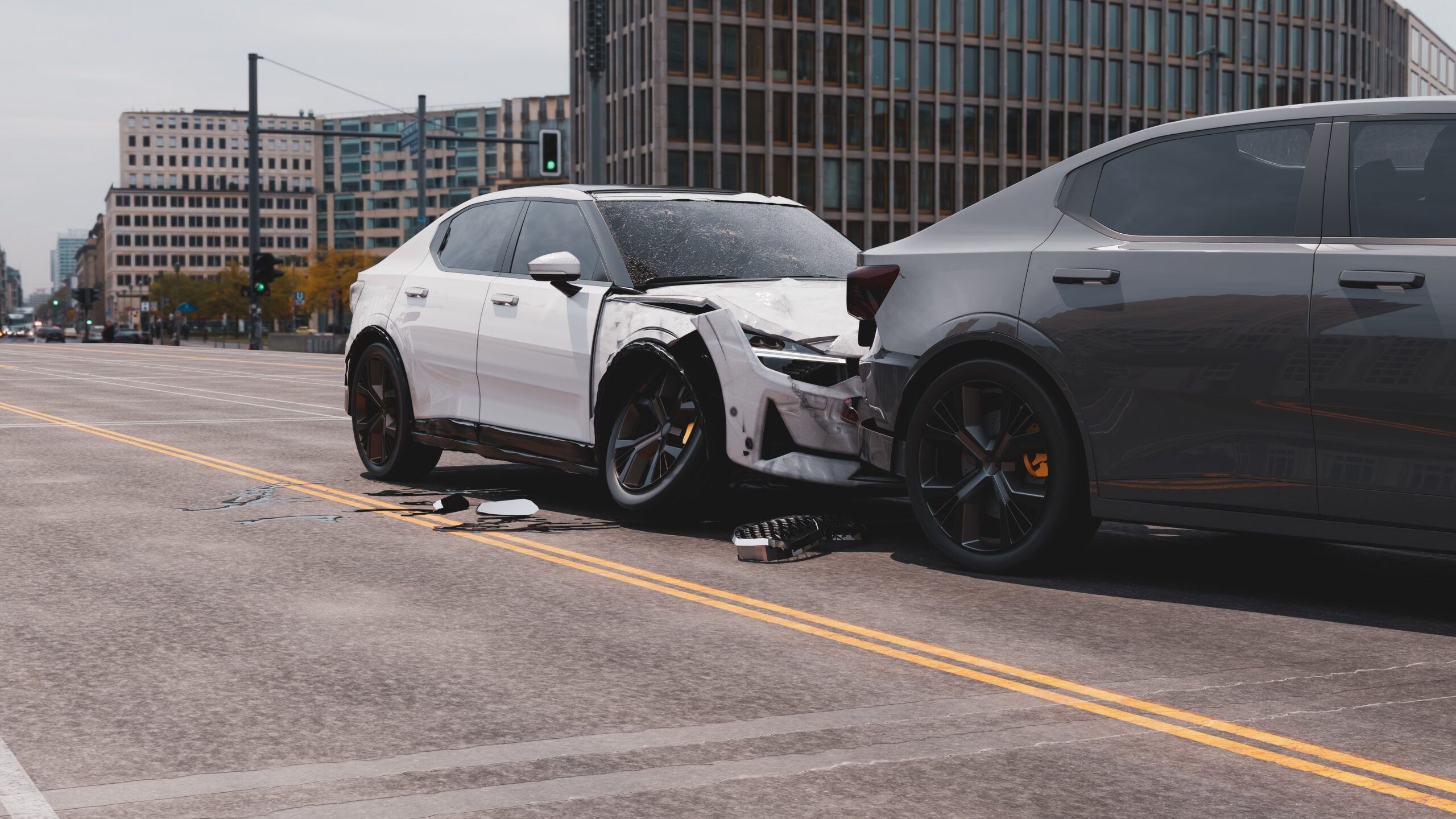
Three crashes. Every single day. That’s not a projection or a worst-case estimate. It’s the quiet, unglamorous reality of life on Frederick County’s roads — the data that sits inside Maryland State Police accident reports while most residents drive past the same intersections every morning without a second thought. Until the day they don’t. Maybe it happened to you on the on-ramp where US-15 feeds into MD-144 during the 8 a.m. crawl. Maybe it was a left turn gone wrong at the Patrick Street and Shookstown Road intersection — an intersection that has seen so many angle crashes it’s become a grim local landmark for anyone who drives it daily. Maybe it was a truck that changed lanes on I-70 near the MD-144 interchange and never saw your car in the space it was already occupying. Whatever happened, here is the thing that most Frederick County accident victims don’t realize until it’s too late: the mistakes that cost people their recovery aren’t made in the courtroom. They’re made in the first 48 hours after the crash — in phone calls, in waiting rooms, in texts sent to family members that get screenshotted, in statements made to adjusters who were trained specifically to receive them. As a personal injury attorney in Frederick, MD, MWKE Law Firm has seen this pattern repeat across hundreds of cases. We’re interested in telling you what actually costs people — and what actually protects them.Frederick’s Roads Are Not Getting Safer. The Data Tells a Different Story.
Before we talk about legal mistakes, let’s talk geography — because where your accident happened matters more than most people realize, and understanding Frederick’s specific danger corridors is the first step to understanding why local legal knowledge is irreplaceable. Frederick County sits at a convergence of some of Maryland’s busiest travel arteries. US-15 carries a heavy mix of commuter, commercial, and interstate traffic through the heart of the county. I-70 bisects the county east to west, connecting the Baltimore metro to Hagerstown with a relentless volume of tractor-trailers. US-40 — called the Golden Mile locally — runs through the commercial beating heart of Frederick City itself, a strip of big-box retail, fast food corridors, and strip mall driveways that produces T-bone and rear-end crashes with depressing regularity. Add to this the explosive residential growth in communities like Ballenger Creek, Linton at Ballenger, and the Urbana-Sugarloaf corridor along MD-355 — tens of thousands of new residents funneling onto roads that were designed for a fraction of that load — and you start to understand why the crash count is what it is. Here are the specific corridors where our personal injury cases in Frederick most frequently originate:US-15 (Catoctin Mountain Highway) — The Merge Problem
The stretch of US-15 between the US-340 interchange near the Potomac River and the Monocacy Boulevard exit north of Frederick City carries enormous volume at highway speeds. The geometry of the on/off ramps near Rosemont Avenue is particularly unforgiving — short merge lanes, limited sight lines, and a driver population that includes both local commuters who’ve done the route a thousand times and out-of-state travelers navigating unfamiliar territory. Rear-end collisions and merge-conflict crashes here regularly produce serious injuries, and liability disputes are common because multiple vehicles are often involved.US-40 / Patrick Street (The Golden Mile) — The T-Bone Corridor
Running east from downtown Frederick toward Hagerstown, US-40 is a commercial gauntlet. The intersection at Patrick Street and Shookstown Road is one of the most accident-prone in the county, with left-turn conflicts resulting in angle crashes at high speeds. The stretch near Baugher’s, the Westview Promenade entrance, and the cluster of fast-food and retail driveways between Md-144 and Md-180 creates a pattern of side-swipe and rear-end accidents driven by distracted lane changes and unpredictable deceleration. Pedestrian accidents also occur along this corridor, particularly near the crosswalks serving the commercial areas around Westview Drive.MD-355 (Urbana Pike / Buckeystown Pike) — The Growth Corridor
South of Frederick, MD-355 runs toward Urbana and Clarksburg through one of the fastest-growing residential zones in the state. The intersections at Hayward Road and Gas House Pike have become accident clusters as residential traffic volumes have overwhelmed the road’s original design capacity. Rear-end crashes at stop-controlled intersections along this corridor are particularly common, and the mix of residential drivers, construction traffic, and commuters creates unpredictable conditions throughout the day.Opossumtown Pike — The Underestimated Route
Locals say the name without hesitation. Out-of-towners learn it the hard way. Opossumtown Pike carries a surprising volume of commercial and industrial traffic, particularly near the intersections at Baugher Road and Motter Avenue. Truck-related accident claims from this corridor arrive at our office with regularity — and these cases carry specific complexities around commercial vehicle regulations, trucking company liability, and cargo documentation that make them very different from standard two-car accident claims.Biggs Ford Road at US-15 — The Left-Turn Dispute
This interchange, serving communities in Walkersville and northern Frederick County, is where left-turn accidents generate some of the most aggressively contested liability disputes we see. Biggs Ford Road carries residential traffic onto the US-15 system, and speed differentials and limited signal cycles complicate the left-turn movements here. When an accident happens here, both parties often genuinely believe they had the right of way — and that good-faith disagreement becomes ammunition for an insurance company trying to establish contributory negligence.South Market Street and the Downtown Core
The spine of historic downtown Frederick is a different kind of danger. Market Street from 7th Street to the Carroll Creek Linear Park area carries a simultaneous mix of pedestrians, cyclists, delivery vehicles, tourist foot traffic, and local commuters. Pedestrian accident claims and bicycle accident claims from this corridor involve their own specific legal frameworks, and the documentation challenges are unique because surveillance camera coverage and witness availability are very different from a highway crash.East Patrick Street Near Frederick Health Hospital
The blocks surrounding Frederick Health Hospital (formerly Frederick Memorial Hospital) at 400 West 7th Street create a consistent accident zone. Hospital-adjacent roads carry staff shift-change traffic, emergency vehicles, patients, and families operating under stress, and a general distraction level that elevates risk. The 7th Street and East Patrick Street intersection has produced multiple personal injury cases involving right-of-way disputes and emergency vehicle interaction accidents.What Victims Get Wrong: The Real Mistakes That Close Cases Before They Begin
Now for the part that matters most. Every mistake on this list is drawn from actual patterns our personal injury attorneys in Frederick have observed — not hypotheticals, not law school scenarios, but real cases where real people walked in having already made the situation harder than it needed to be.Mistake One: Talking to the Other Driver’s Insurance Company Without an Attorney
This is the single most common and most costly mistake Frederick accident victims make. Within 24 to 72 hours of an accident on any road in the county — US-15, Opossumtown Pike, Buckeystown Pike, or downtown Market Street — an insurance adjuster from the at-fault party’s insurance company will call you. They will be polite, professional, and sympathetic. They will say they want to “understand what happened” and “get your side of the story.” They will ask if they can record the statement “just for their files.” Everything about this interaction is designed to generate a document that minimizes your claim. You are almost certainly still in shock. You may not yet know the full extent of your injuries — soft tissue damage, disc injuries, nerve involvement, and traumatic brain injuries can take days or weeks to fully manifest. You have no idea yet what your medical bills will be, what work you’ll miss, or what long-term treatment you might need. And in that state, you are being asked to make a permanent, recorded account of what happened and how you feel. The statement you give on Day 2, when you say “I’m sore but okay,” becomes Exhibit A when the insurer argues against the MRI finding on Day 14. The offhand comment about the traffic light becomes the foundation of a contributory negligence argument you never saw coming. You have no legal obligation to give a recorded statement to the other party’s insurer. Politely decline, say your attorney will be in touch, and call MWKE.Mistake Two: Not Understanding That Maryland Law Is Built Against You
Maryland is one of only four jurisdictions in the United States still operating under pure contributory negligence. This is not a minor legal footnote. It is the most consequential legal rule in any Maryland personal injury case, and the insurance industry knows it intimately. Under contributory negligence, if you are found to be even 1% at fault for the accident that injured you, you may recover nothing. Zero dollars. Not a reduced amount — nothing. Think about what this means in practice on Frederick’s roads. An accident at the confusing intersection of Motter Avenue and MD-180, where the traffic pattern is genuinely ambiguous. A rear-end collision on Biggs Ford Road, where your brake lights had a minor issue you weren’t aware of. A sideswipe on US-15 during a merge where both drivers made simultaneous decisions. In any of these scenarios, an adjuster or defense attorney looking to avoid paying a claim will probe aggressively for any evidence — however thin — that you contributed to the accident. This is why recorded statements are so dangerous. This is why the specific language you use in the days after a crash matters so much. And this is why having a personal injury attorney in Frederick, MD who practices Maryland law — not general multi-state PI law, but Maryland law with all its specific quirks — is not a luxury. It is a practical necessity.Mistake Three: Delaying Medical Treatment
The connection between the timing of your medical treatment and the value of your claim is direct and brutal. When you don’t seek immediate medical attention after a crash on Frederick’s roads — or when you wait three or four days, or when you go to urgent care once and then stop — the insurance company’s narrative writes itself: if you were really hurt, you would have gone to the doctor. Frederick Health Hospital at 400 West 7th Street has an Emergency Department that generates the foundational medical record for most serious accident cases in the county. What gets documented there — your reported symptoms, the physician’s findings, the imaging ordered — becomes the bedrock of your claim. If that record is thin because you downplayed your pain, because you were in shock, because you had to get your kids from school and told the nurse “I’m okay” — that thinness will follow your case to its resolution. Go to the doctor. Go the same day. Tell them everything you feel, even the things that seem minor. Report the headache, the neck stiffness, the lower back discomfort, and the ringing in your ears. These are not complaints — they are medical facts that protect you. If you went to the ER and were discharged, but symptoms have worsened, or new symptoms have appeared in the days since, go back. Go to your primary care physician. Get follow-up imaging if it’s warranted. The medical record is a living document while you’re still treating, and it can be supplemented. What it cannot be is retroactively created.Mistake Four: Posting on Social Media
This one should not need to be said in 2026, and yet it costs Frederick accident victims real money every year. A photo from a family birthday party three weeks after your crash — taken on a good day, when the pain medication was working, and you smiled for the camera — becomes evidence that you weren’t as injured as you claimed. A Facebook check-in at a restaurant. An Instagram story of a walk along Carroll Creek Linear Park. A text to a friend that gets screenshotted and forwarded. Insurance defense attorneys and their investigators use social media monitoring as a standard part of claims investigation. What you post is discoverable. What your friends tag you in is discoverable. The settings you think protect you are not as protective as you believe. The rule is simple: after an accident, go dark. Don’t post about the accident, don’t post about your recovery, don’t post about your activities, and ask close family and friends to do the same.Mistake Five: Accepting the First Settlement Offer
The first settlement offer from an insurance company is rarely the right number. It is a starting position — a figure calculated based on what the insurer believes you’ll accept without legal representation. That calculation is not based on the full value of your medical expenses, your future treatment needs, your lost wages, your lost earning capacity, or your pain and suffering. It’s based on a formula designed to close claims quickly and cheaply. The first offer typically arrives before you’ve reached maximum medical improvement — before you or your doctors fully understand the long-term scope of your injuries. Accepting it means signing away your right to any future compensation, even if your condition worsens. A herniated disc that seems manageable at week four can require surgery at week sixteen. If you’ve already settled, you bear that cost alone. A personal injury attorney in Frederick will not allow you to settle before the picture is complete. That patience — the willingness to wait for the right number rather than the quick number — is frequently the difference between a settlement that covers your losses and one that leaves you underwater.Mistake Six: Assuming All Personal Injury Attorneys Know Frederick
This is the mistake nobody talks about, and it’s the one that quietly undermines cases that could have gone differently. National referral networks, online legal marketplaces, and 1-800 attorney services will connect you with a lawyer. What they cannot guarantee is that the lawyer knows the specific terrain of Frederick County — the documented accident history of Biggs Ford Road, the commercial truck routes that run through Opossumtown Pike to avoid weigh stations on I-70, the disposition of claims in Frederick County Circuit Court, the local accident reconstruction professionals who understand Frederick’s road geometry, or the way a Frederick County jury responds to specific types of cases. Local knowledge in personal injury law is not a marketing phrase. It operates in the details of case building, which witnesses credibly establish road conditions, testimony lands in this specific courthouse, and how to document a claim arising from a road segment with a known defect history. Frederick is MWKE’s community. We practice in Frederick County Circuit Court. We know these roads because we drive them. And that operational familiarity shows up in the quality of the cases we build.What Maryland Law Actually Allows You to Recover
One of the most persistent misconceptions about personal injury claims in Frederick is that the value of a case equals the medical bills. Insurance adjusters actively reinforce this misconception because it dramatically undervalues most claims. Maryland law allows recovery across a full spectrum of losses:- Economic damages are the quantifiable financial losses: medical expenses already incurred, future medical treatment, including surgery, physical therapy, and ongoing medication, lost wages from time missed at work, reduced future earning capacity if your injury permanently limits what you can do professionally, vehicle repair or replacement, and all ancillary costs like transportation to medical appointments and in-home care.
- Non-economic damages are the human cost of what happened: the physical pain and suffering you’ve endured and will continue to endure, emotional distress and anxiety, loss of enjoyment of the activities that defined your life before the crash, and loss of consortium — the legal recognition of how your injury has affected your most important relationships.
- Future damages require expert testimony and careful calculation, but they are real, and they are recoverable. If a lumbar disc injury from a crash on I-70 near the MD-144 interchange will require a surgical procedure in the next two years and limit your physical work capacity for the next decade, those losses have a present value today. Every settlement that doesn’t account for them is a settlement that fails you.
The Statute of Limitations: A Clock That Doesn’t Pause
Maryland’s general statute of limitations for personal injury claims is three years from the date of the accident. That sounds generous. It is not, once you understand how quickly that window fills. Reaching maximum medical improvement before settling — the right approach — can take twelve to eighteen months for serious injuries. Witness identification, retention, and preparation take time. Negotiation periods can extend for months. If litigation becomes necessary, Frederick County Circuit Court scheduling adds its own timeline. And then there are the traps within the general rule:- Claims against government entities — a City of Frederick vehicle, a Frederick County school bus, a state highway department truck — require formal written notice in as few as 180 days from the date of injury. Miss that notice requirement, and the claim is gone regardless of the three-year general rule.
- Minor victims have extended timelines in some circumstances, but the specifics are nuanced and require legal analysis.
- Wrongful death claims carry their own distinct limitations period that runs from the date of death, not necessarily the date of the accident.
Personal Injury Attorney in Frederick, MD
A personal injury attorney in Frederick, MD, represents individuals who have been injured in accidents caused by another party’s negligence in Frederick City and Frederick County, Maryland. This includes motor vehicle accidents on roads such as US-15, US-40, MD-355, Opossumtown Pike, and Biggs Ford Road; pedestrian and bicycle accidents in downtown Frederick; truck accidents on I-70 and US-15; slip-and-fall injuries; and wrongful death cases. Maryland operates under a contributory negligence standard — one of the strictest in the country — which bars recovery entirely if the injured party is found even 1% at fault. This makes qualified local legal representation critical for accident victims in Frederick County. Personal injury attorneys in Frederick handle all insurance communications, gather evidence, obtain medical records, retain witnesses, negotiate settlements, and litigate in Frederick County Circuit Court when necessary. Cases are typically handled on a contingency fee basis, meaning no attorney fees are owed unless compensation is recovered. MWKE is a personal injury law firm with a Frederick, MD office located at 22 S Market St, Frederick, MD 21701, serving clients throughout Frederick County, including Frederick City, Middletown, Brunswick, Thurmont, Walkersville, Urbana, and New Market.Frequently Asked Questions: Personal Injury Attorney in Frederick, MD
How much does it cost to hire a personal injury attorney in Frederick, MD?
MWKE Law Firm handles personal injury cases on a contingency fee basis. You pay no attorney fees unless we recover compensation on your behalf. Your initial consultation is free. There is no financial risk to calling us.- How long do I have to file a personal injury claim in Maryland?
- Do I have to give a recorded statement to the insurance company?
- What if I was partially at fault for the accident?
- Can I still recover if the accident happened on a road with a known defect?
- What types of accidents does MWKE handle in Frederick County?
- What if I already gave a recorded statement before calling an attorney?
- Is MWKE Law Firm actually located in Frederick, MD?
How to Reach MWKE’s Frederick Office
MWKE Law — Frederick, Maryland 22 S Market St Frederick, MD 21701Directions from Every Major Approach
- From US-15 South (Gettysburg, Thurmont, northern Frederick County): Take US-15 South to the East Patrick Street / Md-144 exit. Head west on East Patrick Street into downtown Frederick. Continue through the historic district and turn left (south) onto South Market Street. MWKE is located at 22 S Market Street, approximately one block south of the Patrick Street and Market Street intersection, on your right. Total drive time from US-15 is approximately 5 minutes.
- From I-70 West (Baltimore, Ellicott City, New Market): Take I-70 West to Exit 54 (US-15 North / Md-144). Follow Md-144 West — East Patrick Street — directly into downtown Frederick. Turn left at South Market Street. Our office at 22 S Market Street will be on your right. The drive from the I-70 / US-15 interchange is approximately 8 minutes.
- From US-340 West (Leesburg, VA; Brunswick; Harpers Ferry): Take US-340 East toward Frederick and merge onto US-15 North. Take the East Patrick Street / Md-144 exit. Head west on East Patrick Street into downtown. Turn left onto South Market Street. MWKE at 22 S Market Street is one block ahead on your right.
- From MD-355 North (Urbana, Clarksburg, Gaithersburg): Head north on MD-355 / Buckeystown Pike into Frederick City. MD-355 becomes North Market Street as you enter downtown. Continue south on Market Street through the historic district — our office at 22 S Market Street is on the same road, just past East Patrick Street on your right.
- From Opossumtown Pike / Motter Avenue (northwestern Frederick County): Head southeast on Opossumtown Pike to Md-26 (Liberty Road) or directly to US-15 South. Take US-15 South to the East Patrick Street exit and follow the US-15 South directions above.

